LOUP SARION & SEQUOIA SCAVULLO
Sotto Voce
5 Nov 2026 – 16 Jan 2027
For exhibition text by Zack Darsee scroll downwards!
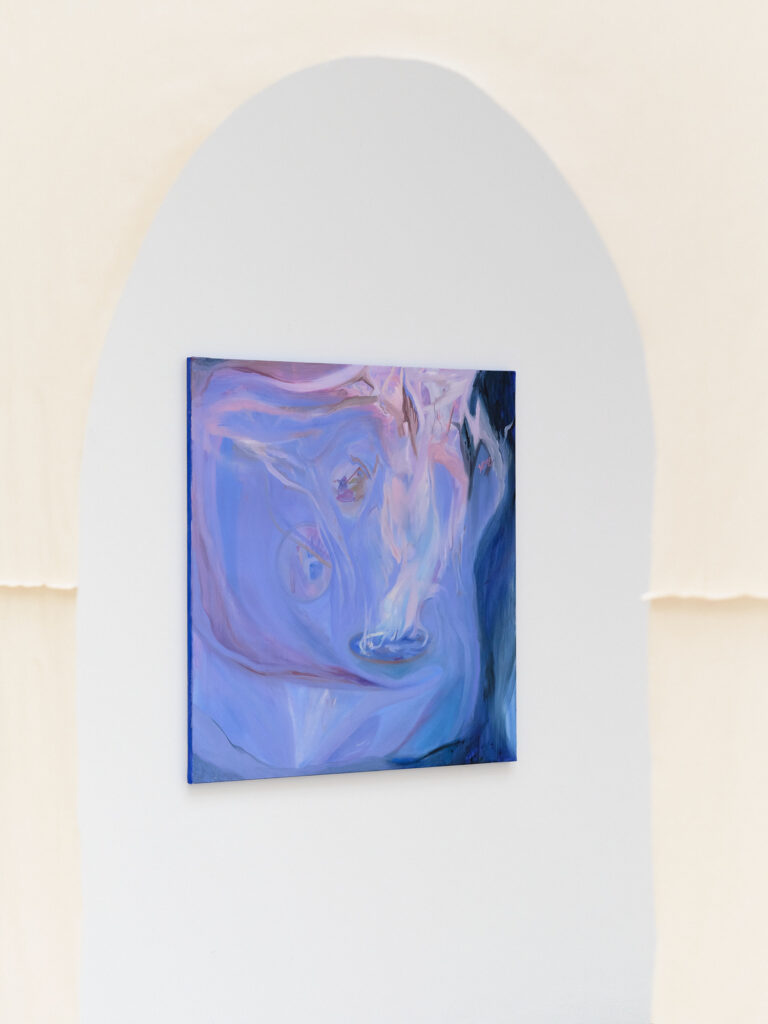

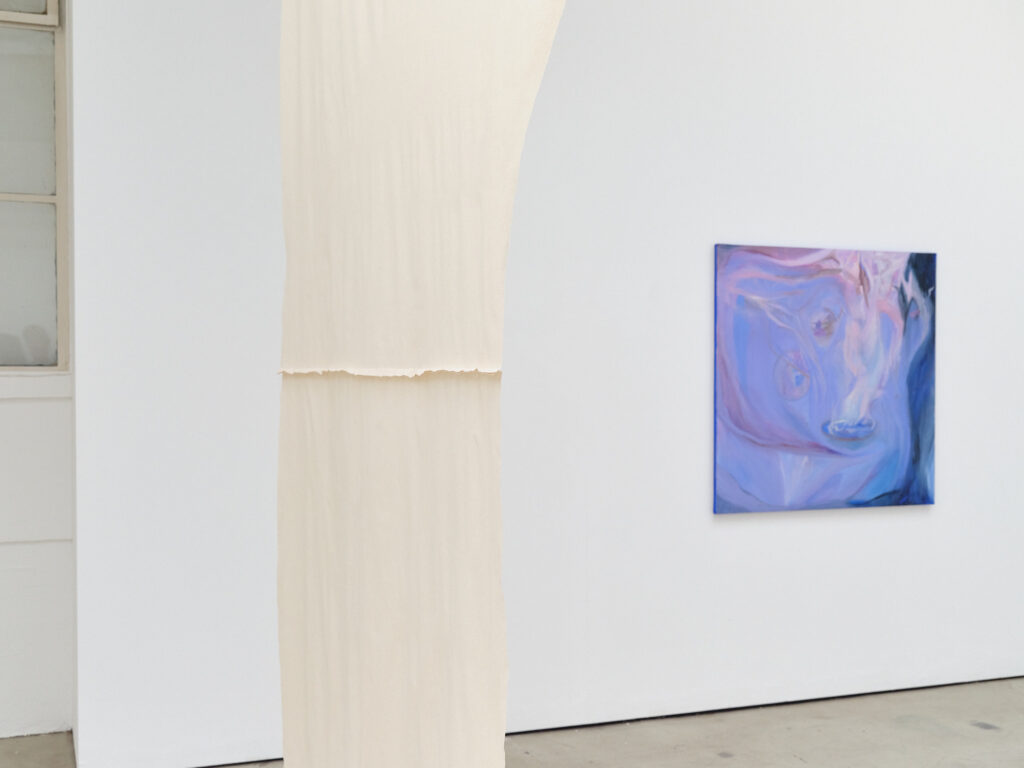
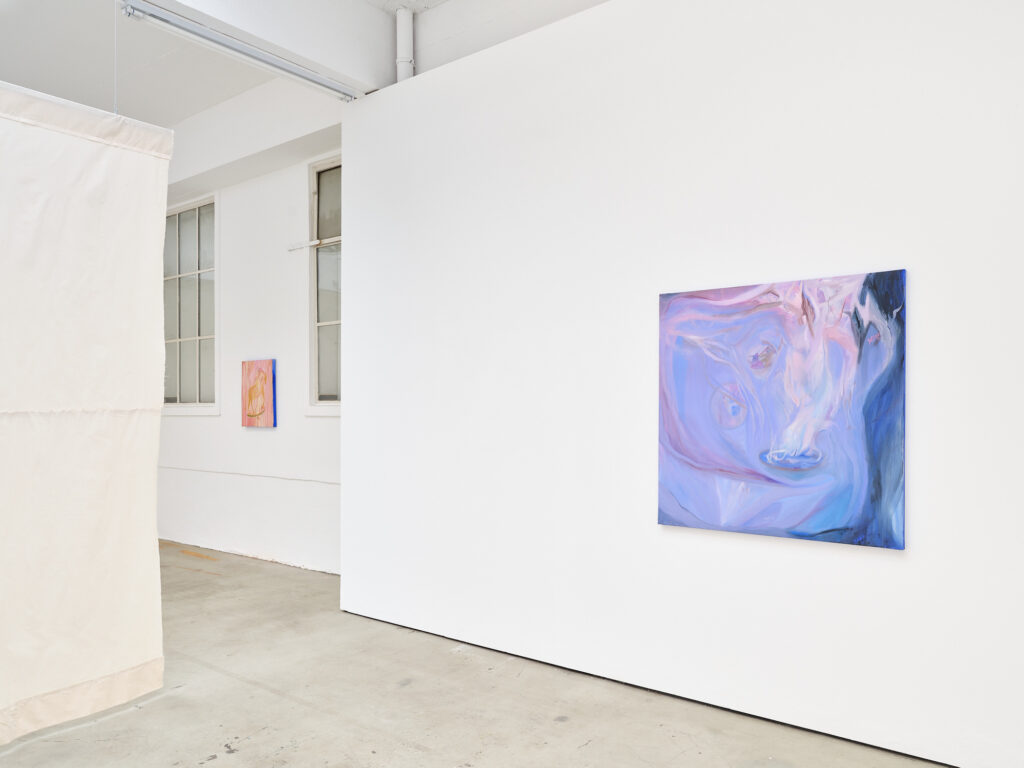
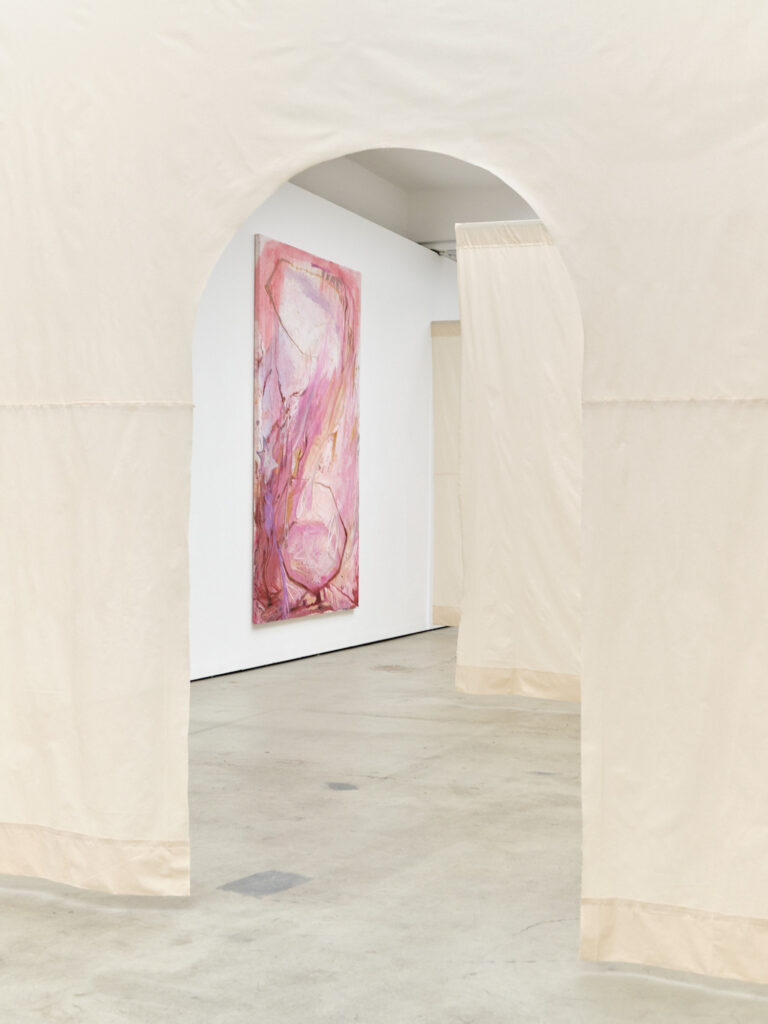
Loup Sarion (b. 1987, Toulouse, France) lives and works in New York City. He studied at the École nationale supérieure des Beaux-Arts in Paris (2010–2015) and The Cooper Union School of Art in New York (2013).
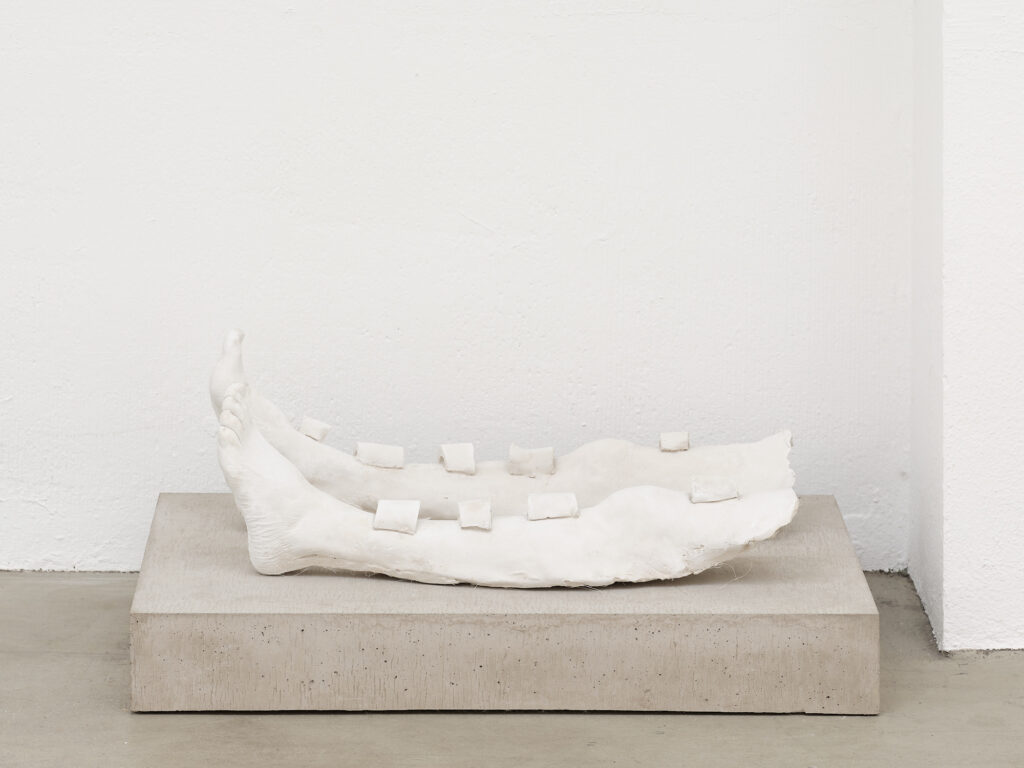
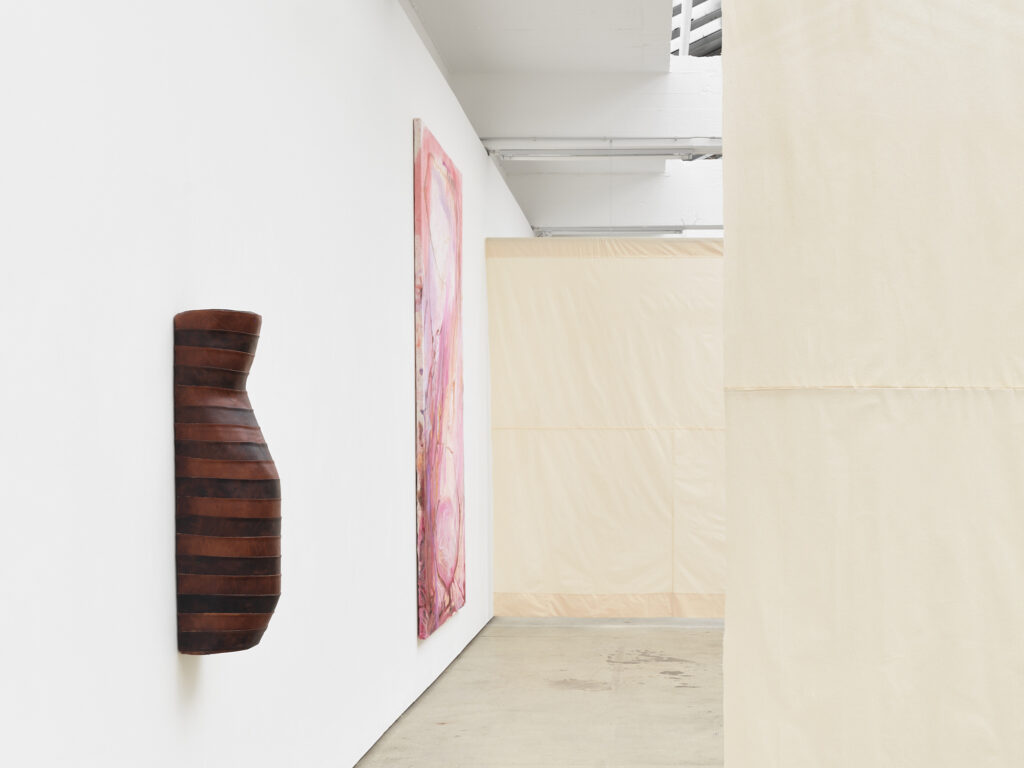
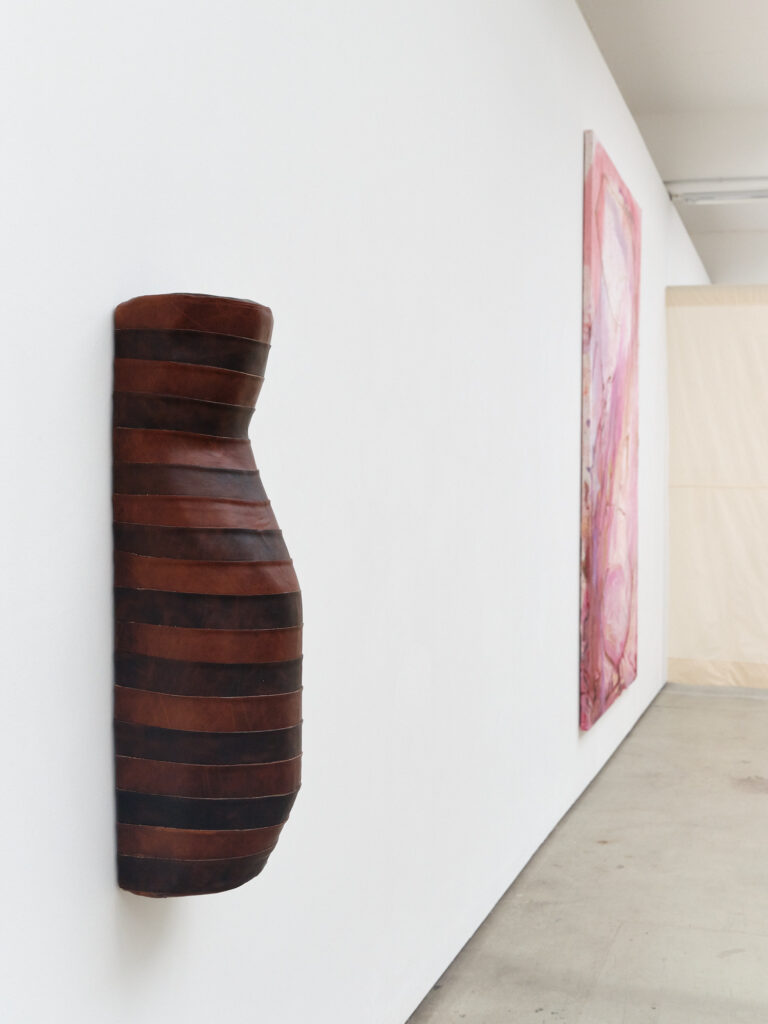
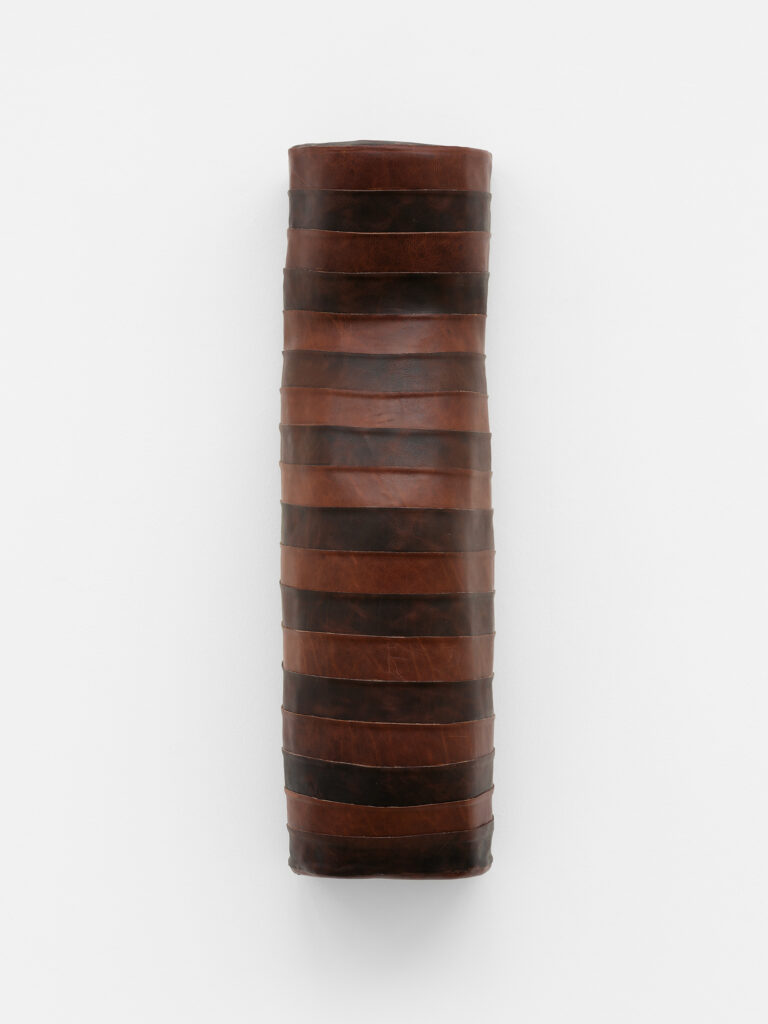
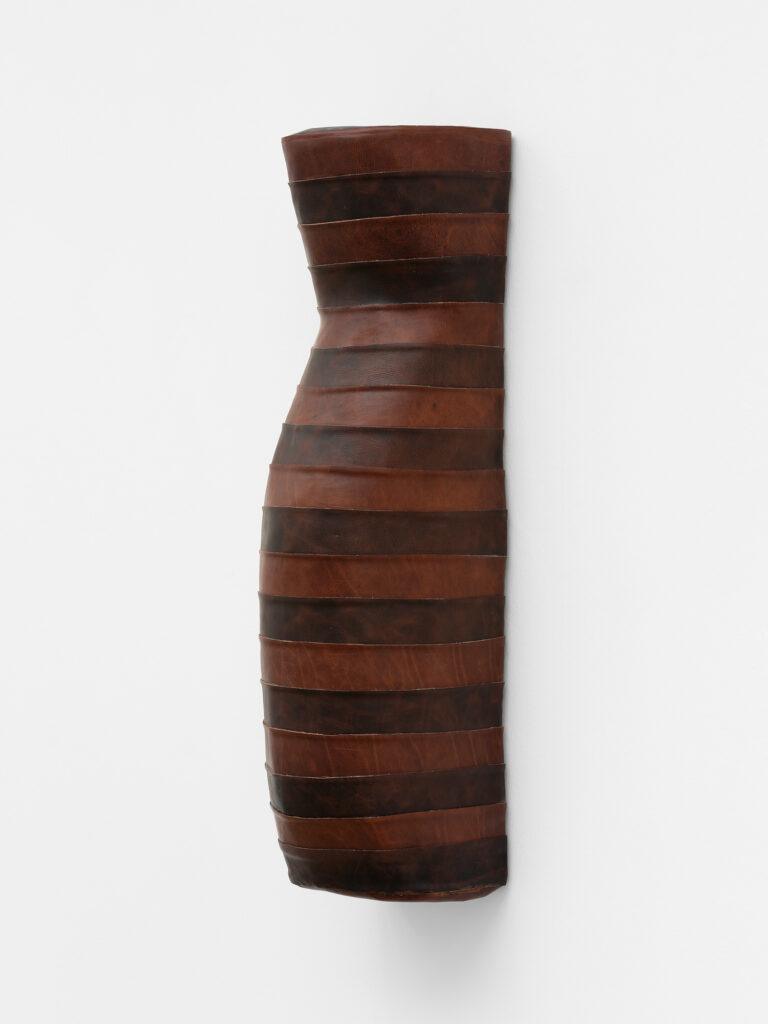
Loup Sarion’s sculptural practice explores the relationship between the human body, everyday objects, and domestic space. His works often begin as loose shapes that he develops into enlarged, tactile forms, including noses and tongues. Working with materials such as beeswax, leather, resin, concrete and polished aluminum, he gives particular attention to surface, texture, and color. These fragmented bodily forms evoke intimacy, desire, and the awkwardness of physical experience. Familiar features become ambiguous shapes that invite viewers to move between recognition and imagination. Through this transformation, Sarion considers how a single detail can suggest a presence, a personality, or an intimate narrative.
Loup Sarion’s solo and two-person exhibitions include Midnight, Sea of Time at Mascota Gallery, Mexico City (2026); a solo exhibition at ECC, Turin (2025); a two-person exhibition with Michel François at 10N, Menorca (2025); a solo presentation at Material, Mexico City (2024); Saliva at Berthold Pott, Cologne (2022); Shining Flesh with Charlotte Vander Borght at A.D., New York (2021); Cannibal Valley with Daniel Boccato at M+B, Los Angeles (2019); Milch in meinen Augen / Milk in My Eyes at Kunstverein Heppenheim, Germany (2019); Tuff Titties with Al Freeman at Sorry We’re Closed, Brussels (2019); Chapo with Harold Ancart at C L E A R I N G, New York (2018); Everybody Is Somebody’s Secret at Berthold Pott, Cologne (2018); Smooth Like an Alibi at FormatoComodo, Madrid (2018); Langue Pendue at SpazioA, Pistoia (2017); Humidity at Jeanroch Dard, Brussels (2016); and I Cut Out the Mug and Went to the Bottle with Strauss Bourque Lafrance at EXOEXO, Paris (2015).
Sequoia Scavullo (b. 1995, Baltimore, USA) lives and works in Paris. She studied at the École nationale supérieure des Beaux-Arts in Paris with Mimosa Echard.
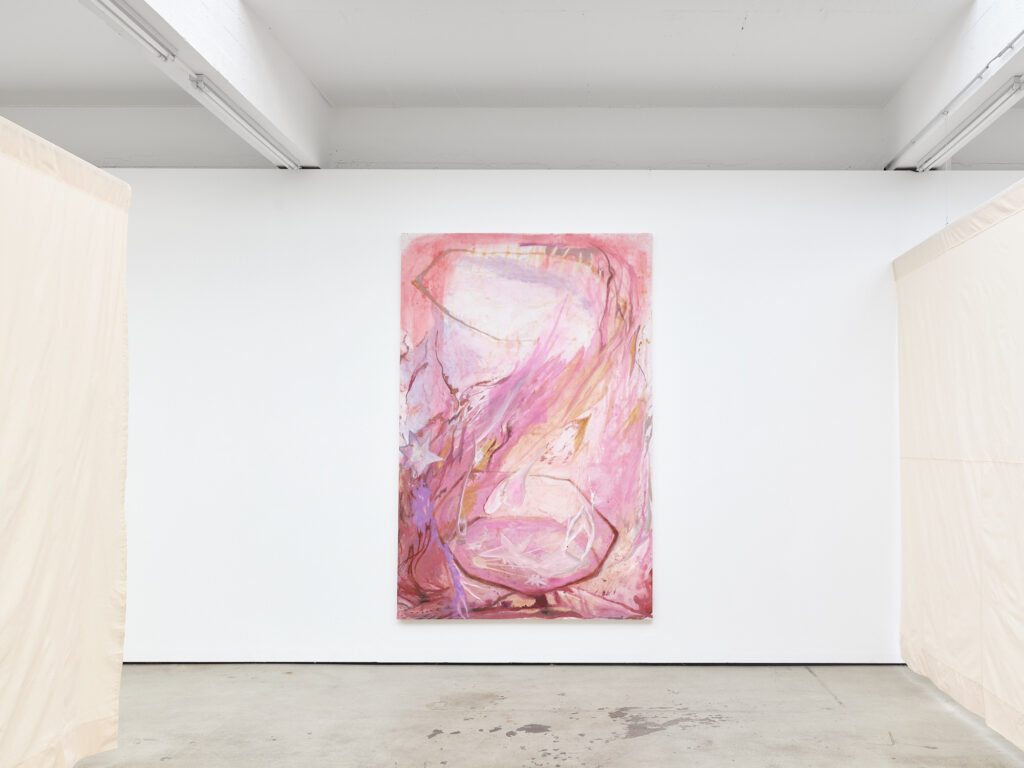
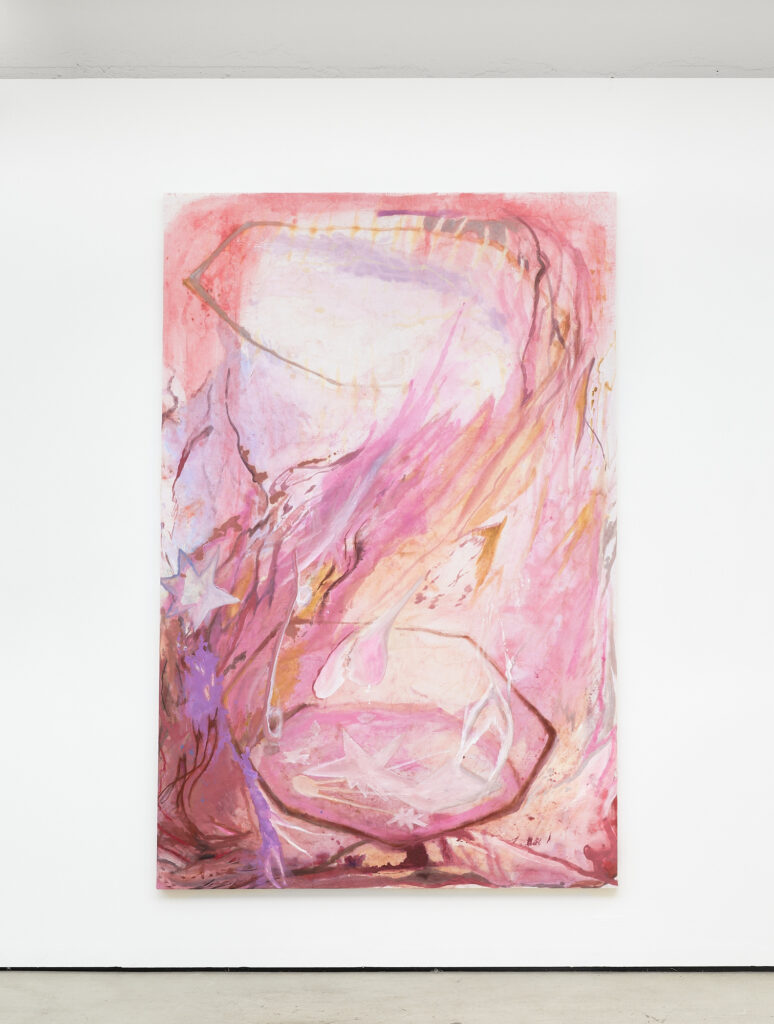
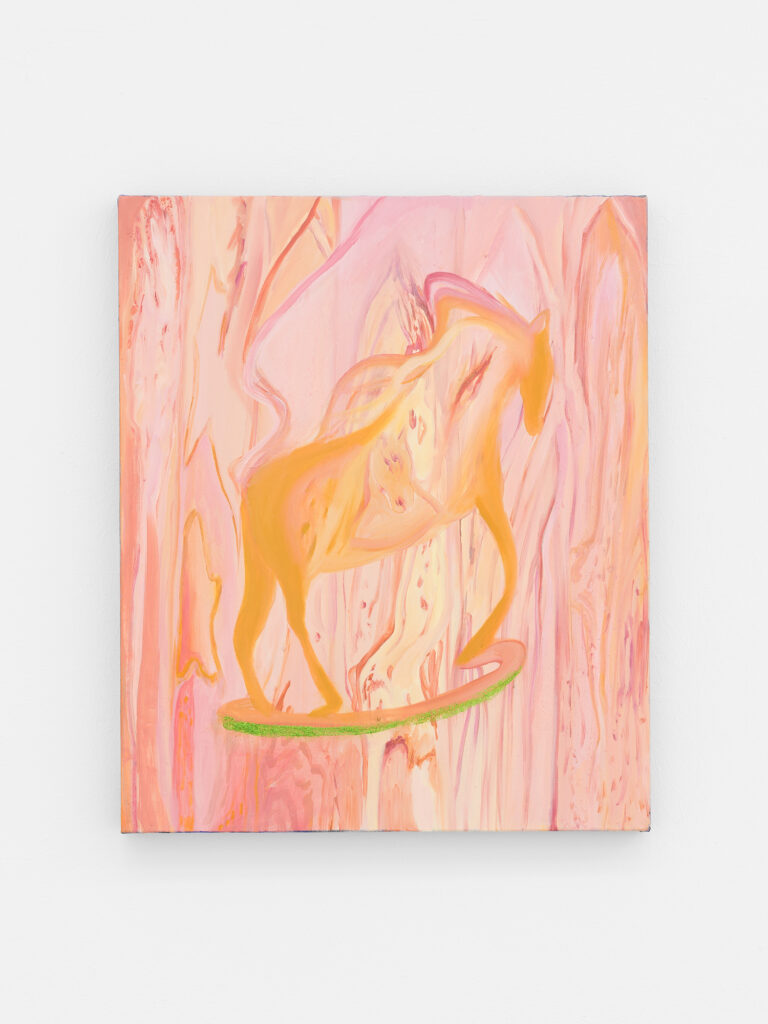
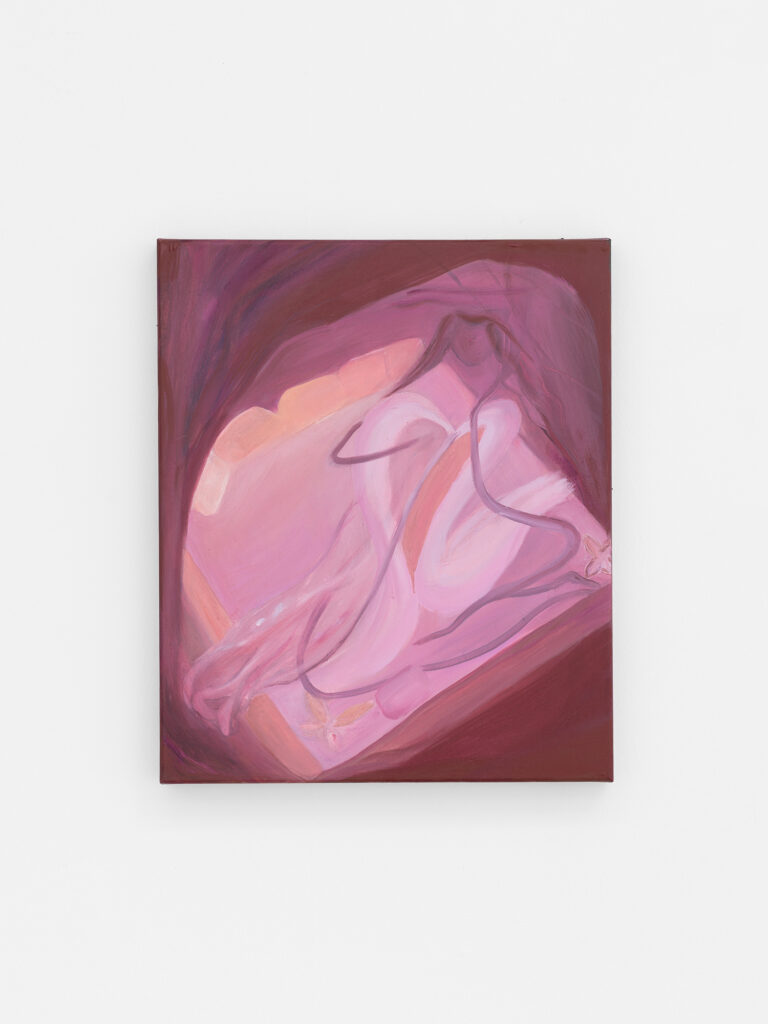
The artist creates figurative paintings in varying formats that exist on the edge of abstraction. Elements of fantastic creatures, body parts, or flying insects blur in a superimposition of layers representing textures such as water, hair, or transparent fabric. The artist also experiments with video and sculpture, developing similar formal processes and blurring the frontiers between these mediums.
Her solo and two-person exhibitions include presentations at carlier | gebauer, Madrid (2026); Pauline Perplexe, Arcueil (2026); Corsica Luce with Sabatina Leccia, Nonza (2024); Sans titre, Paris (2023); Kunstverein Bielefeld (2022); and Pigment Sauvage, Baltimore (2019).
Her work has been shown in Restons Unis 2 at Perrotin, Paris (2026), as well as in group exhibitions at carlier | gebauer, Berlin and Madrid (2026, 2025); FRAC Bretagne, Rennes (2025); Sans titre, Paris, with José Leonilson (2025); PALM Gallery, Taipei (2024); Gaudel de Stampa, Paris (2024); Bradley Ertaskiran, Montreal (2024); Bibeau Krueger, San Francisco (2024); FRAC Corsica – Citadella d’Aiacciu, Ajaccio (2024); Mécènes du Sud, Montpellier (2023); FRAC Corsica (2023); After Hours, Paris (2023); Palais des Beaux-Arts, Paris (2022); Exo Exo, Paris (2022); POUSH – Manifesto, Paris (2021); Haimney Gallery, Barcelona (2020); La Volonté, Paris (2020); Dorchester Art Gallery, Boston (2019); Piano Craft Gallery, Boston (2019); High Zero Foundation, Baltimore (2019); Barbara and Steve Grossman Gallery, Boston (2019); and Yale Norfolk Galleries (2019).
In April 2026, one of her films was screened at the Bourse de Commerce – Pinault Collection, Paris, in conjunction with the exhibition Clair-obscur.
EXHIBITION TEXT
Beneath the voice, with all its semantic entrapments of mistranslation, is another voice; one that speaks in breath, blood, discharge, sweat, piss; the voice of the romantic-abject. Sotto Voce. A secret voice, a secretion that transmits through the skin. It’s on this porous threshold, the wall of the flesh, that this duet begins. Loup Sarion and Sequoia Scavullo harmonise on what bodies, speechlessly, sing.
A duet often carries an element of conflict, as any good conversation does—a vulnerability in difference, a question of power, positioning, balance. Sotto Voce (literally: “under the voice”), in its attention to material and the viewer’s gaze, articulates an archaic battle of the genders and turns it inside out. Where Sarion’s sculptures inject hard materials with tender traces of the human, Scavullo layers vulnerable surfaces of girlhood into an abiding, almost impenetrable strength.
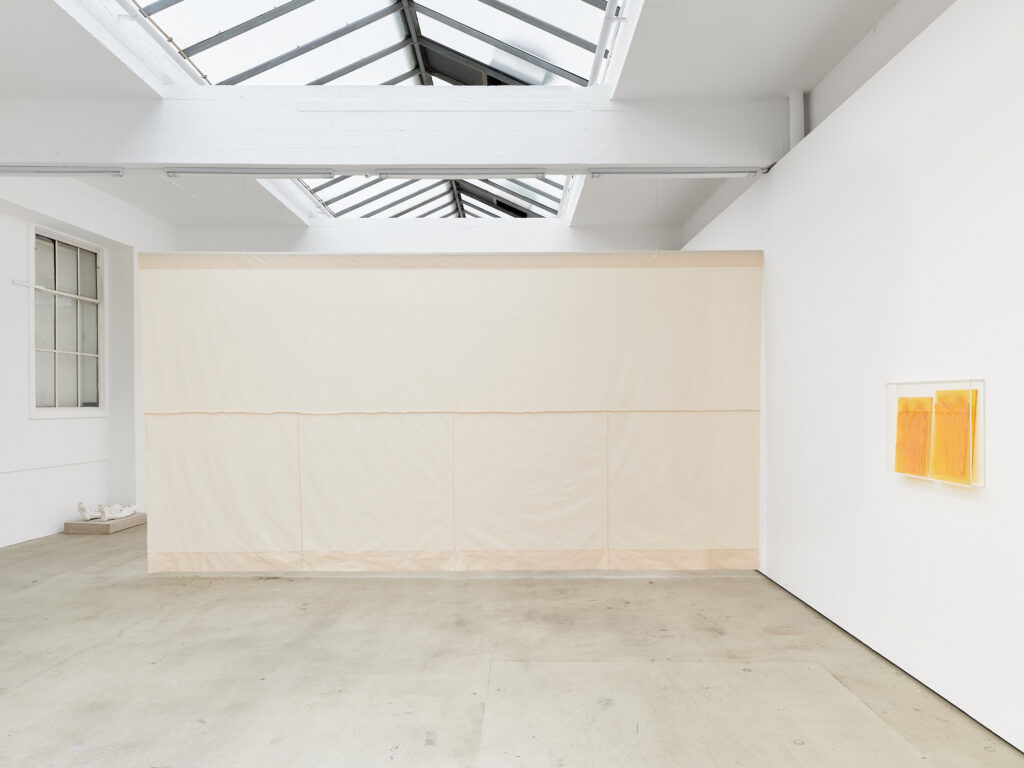
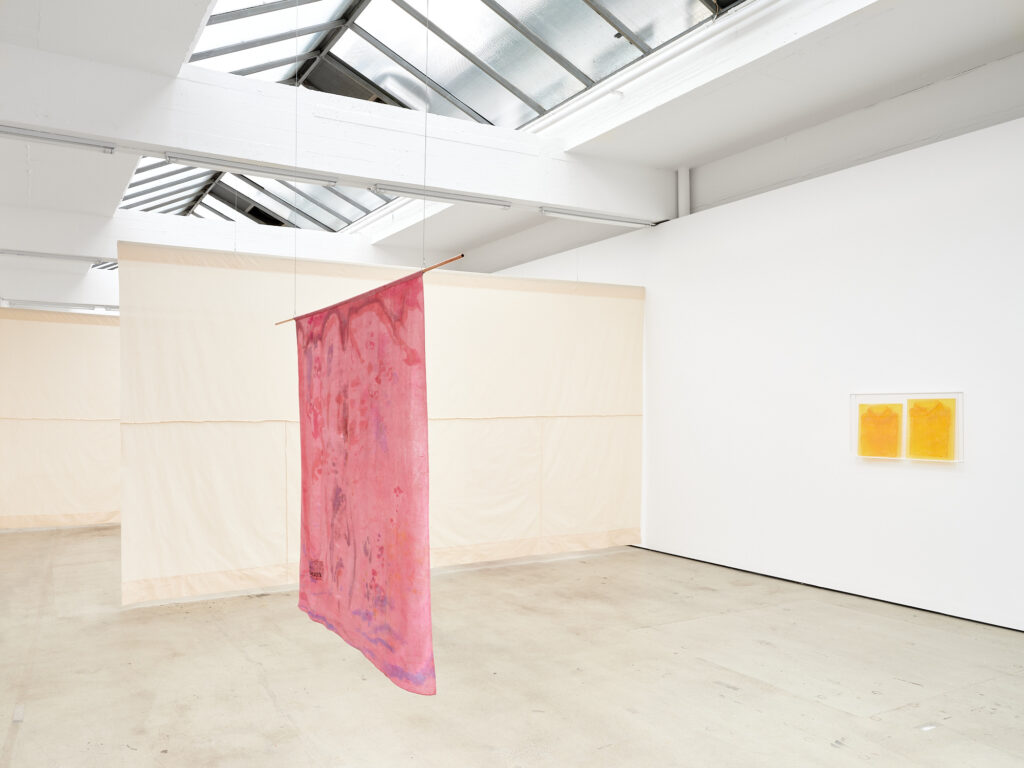
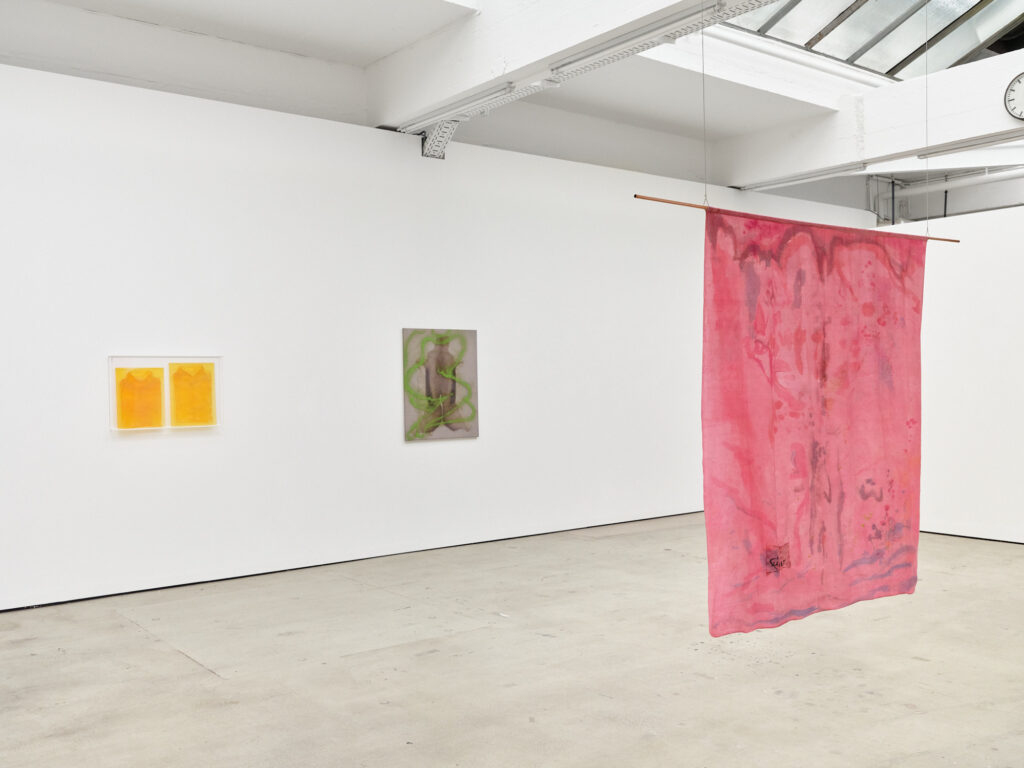
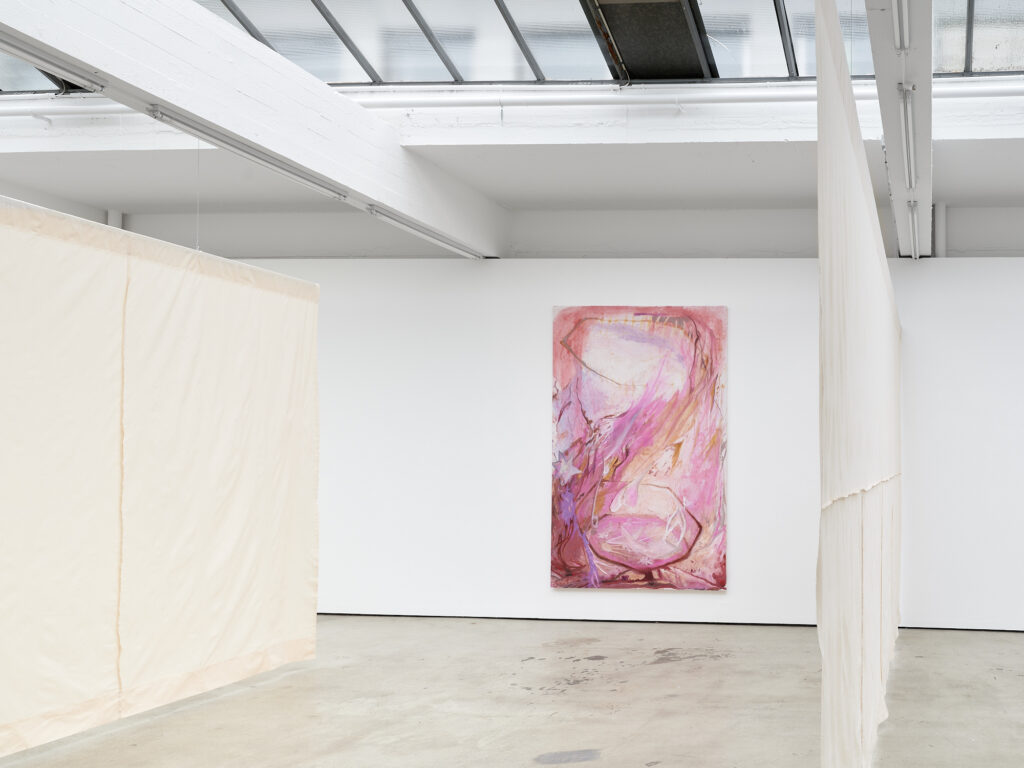
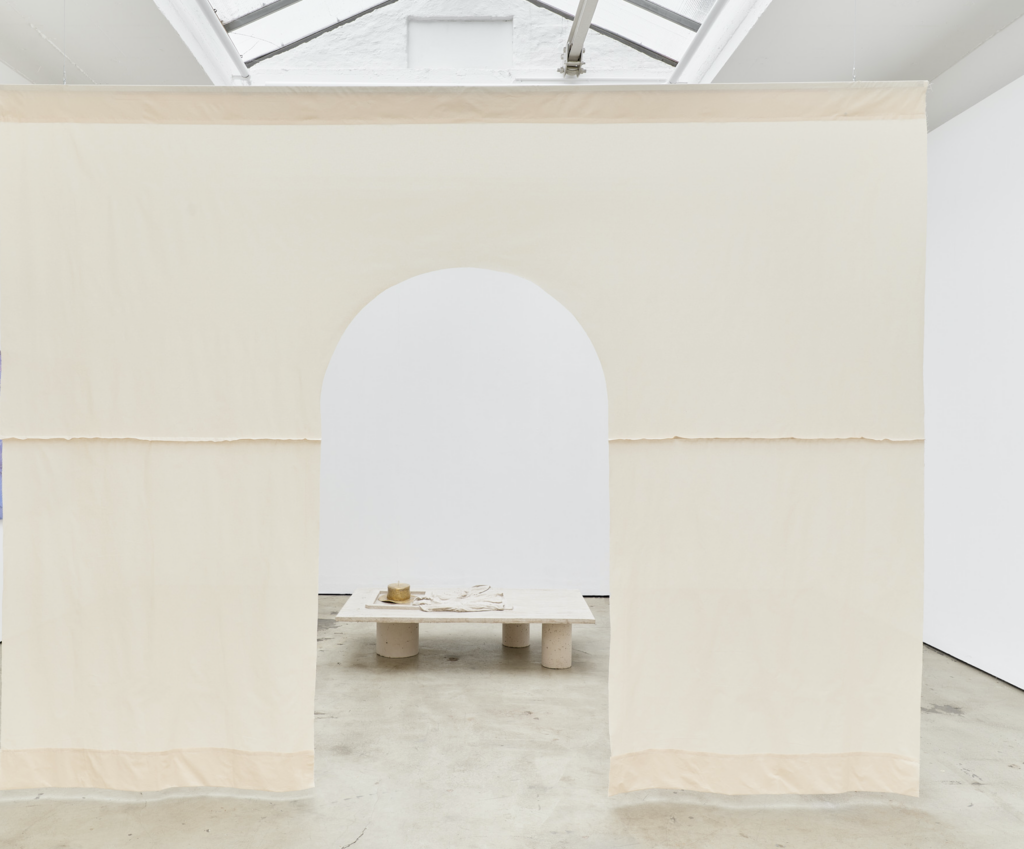
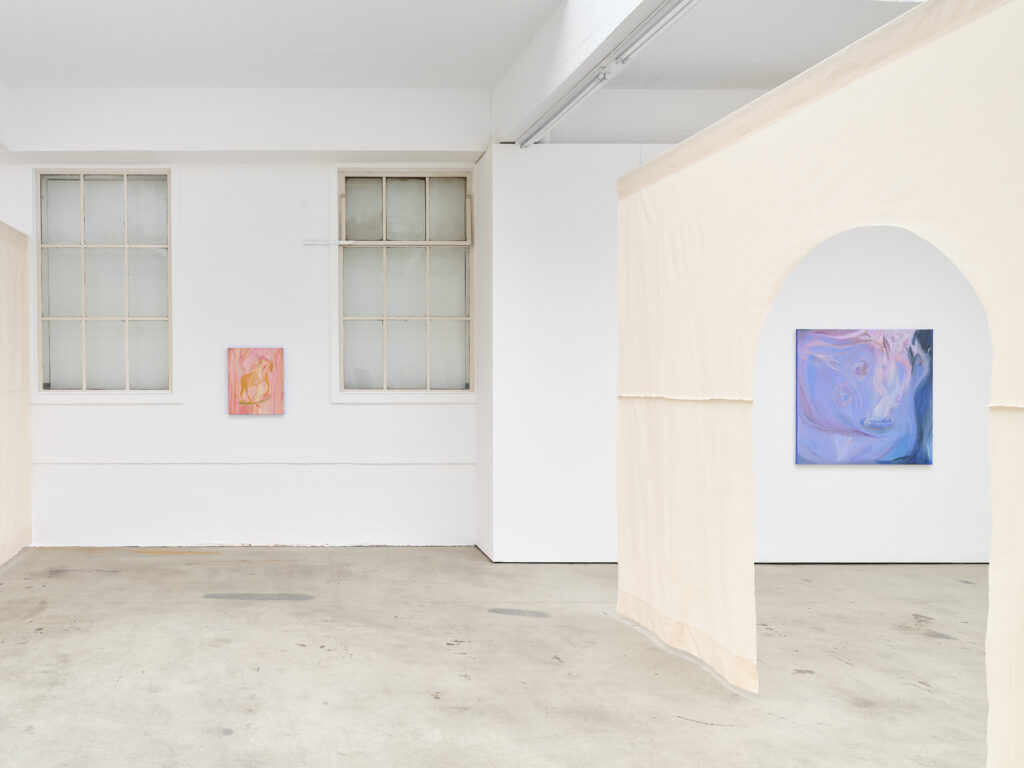
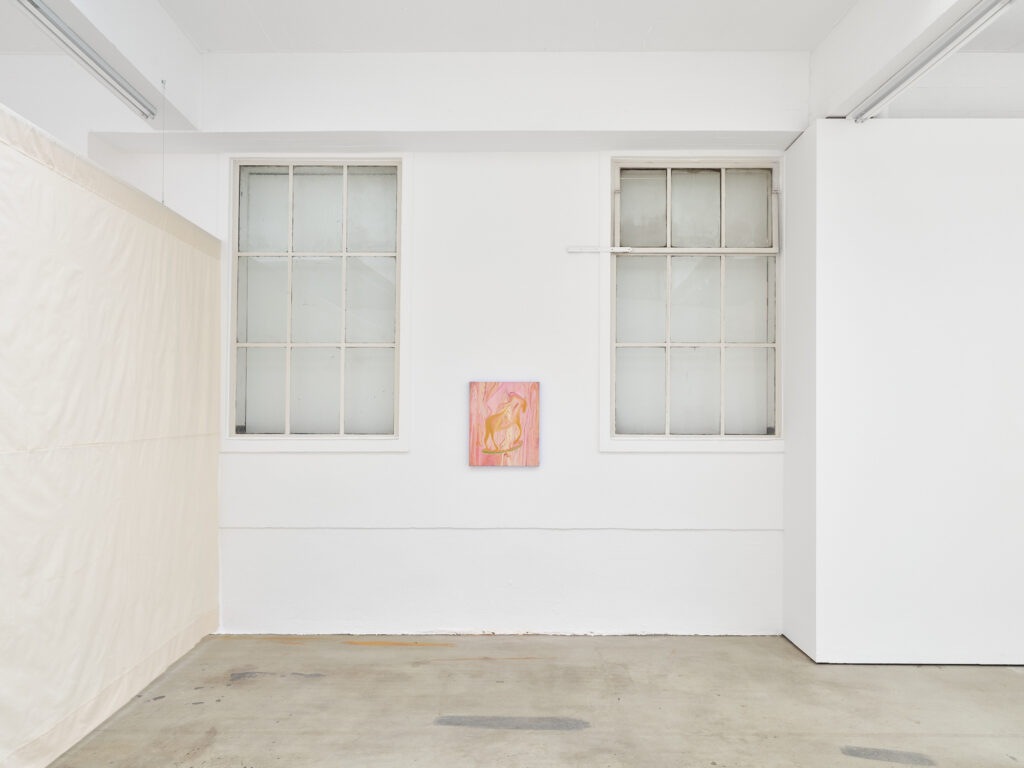
In the middle of the room stands a labyrinth. Its white cotton structure lends a clinical, almost fairy-tale framing to the exhibition. Between, within, beyond, above— it invites a choreography of looking, in relation to dividing, disorienting walls. Intimacy, domesticity, protection, confusion and secrecy— what’s inside, what’s outside, what’s between? What’s under the surface?
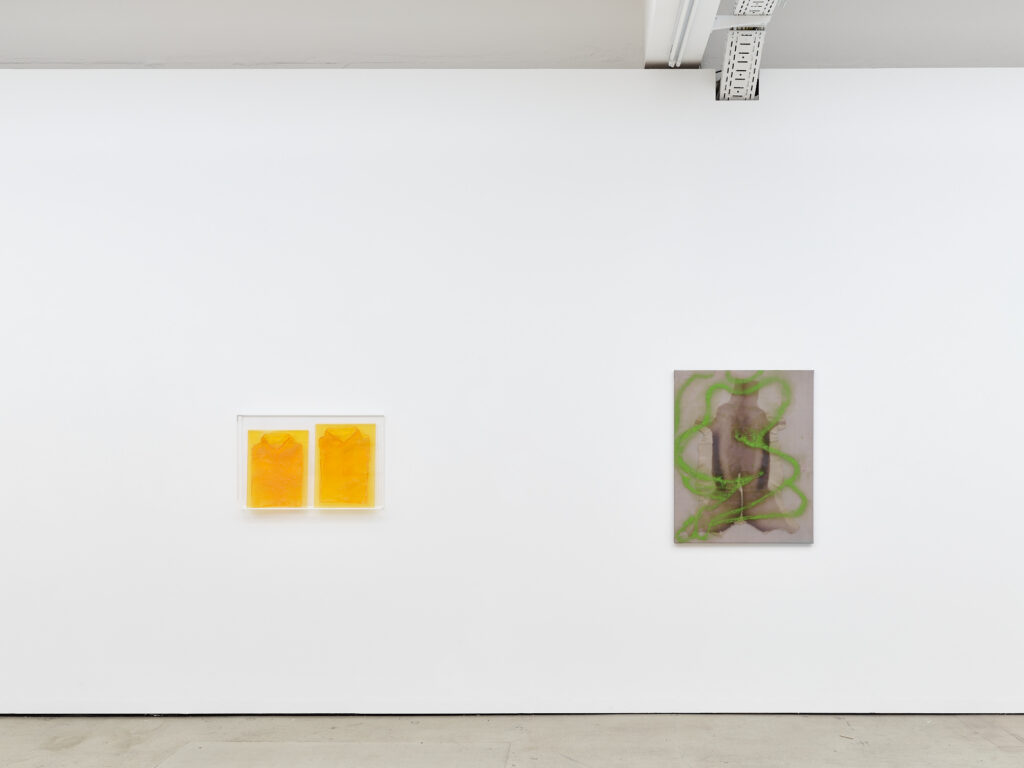
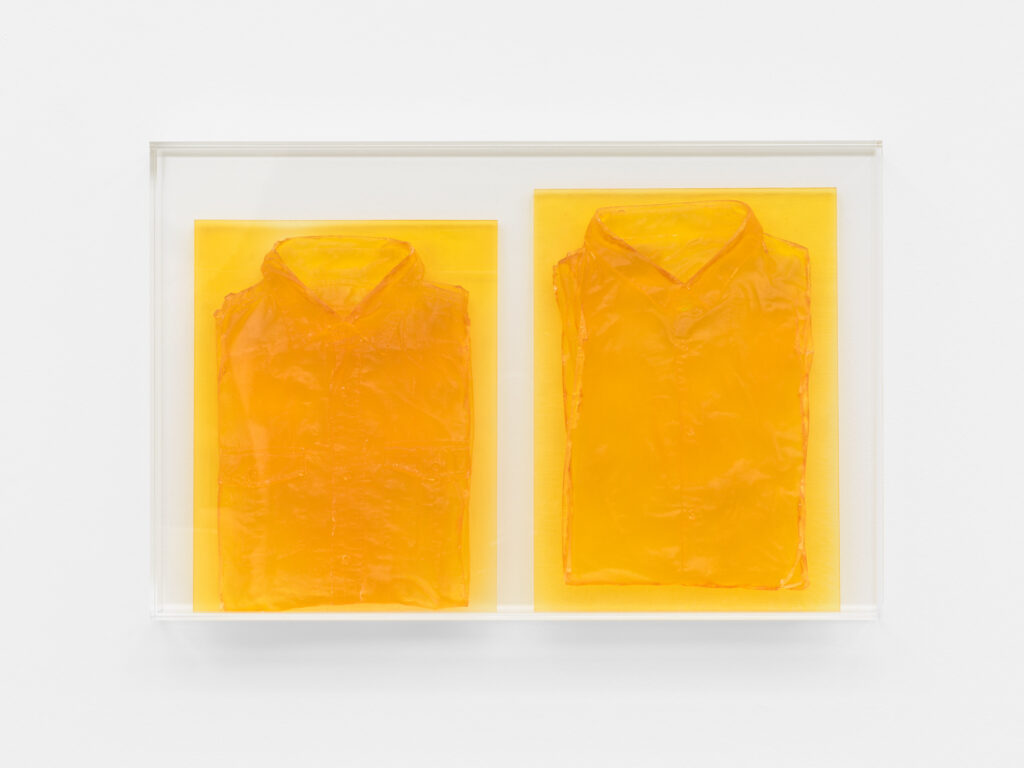
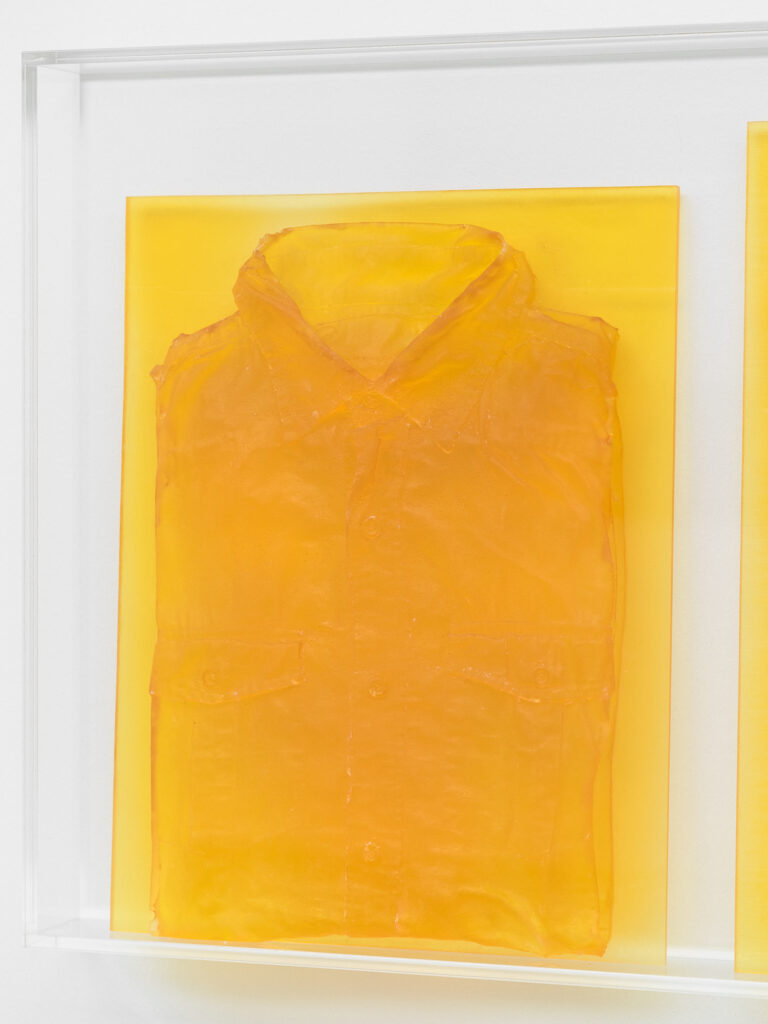
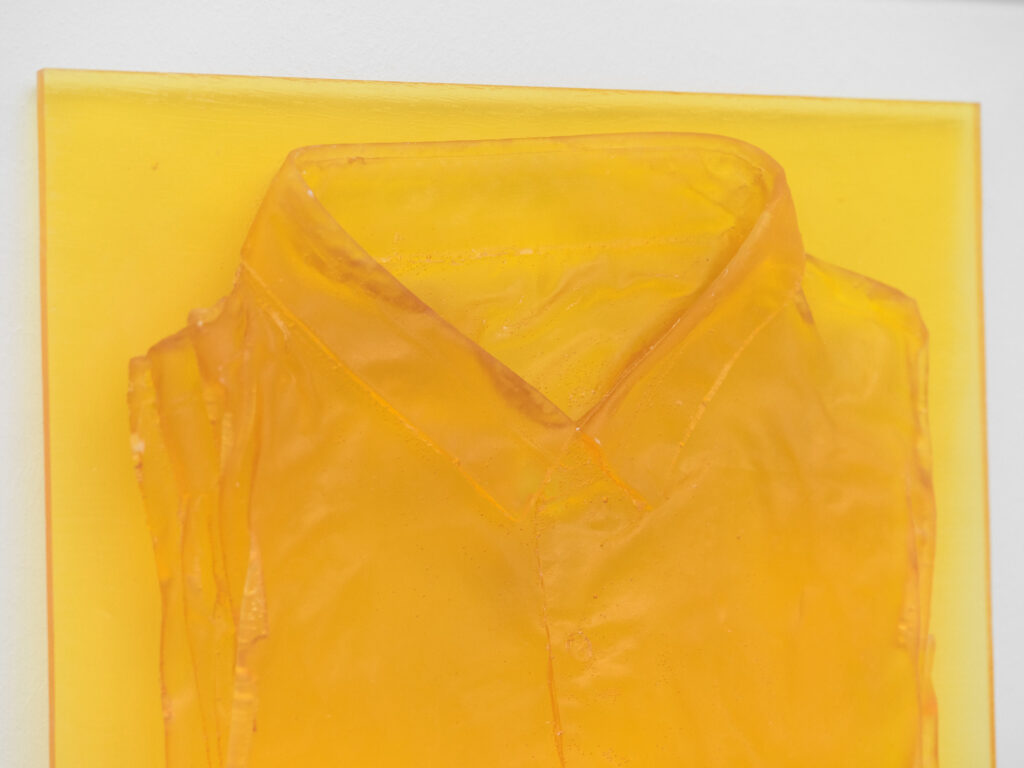
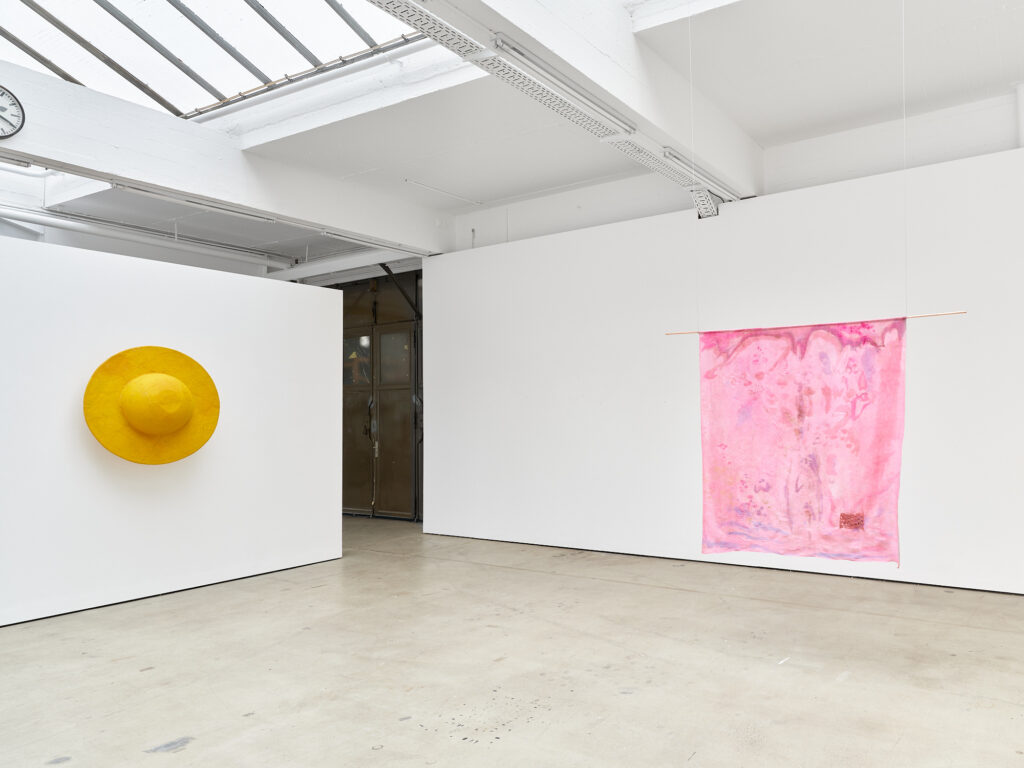
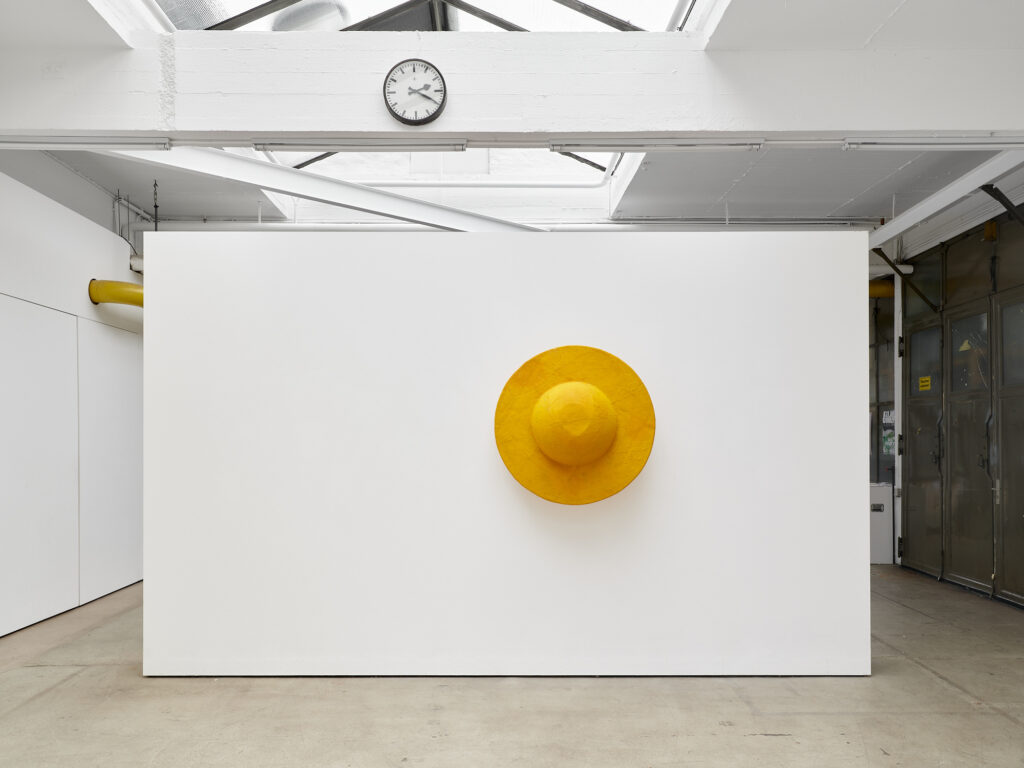
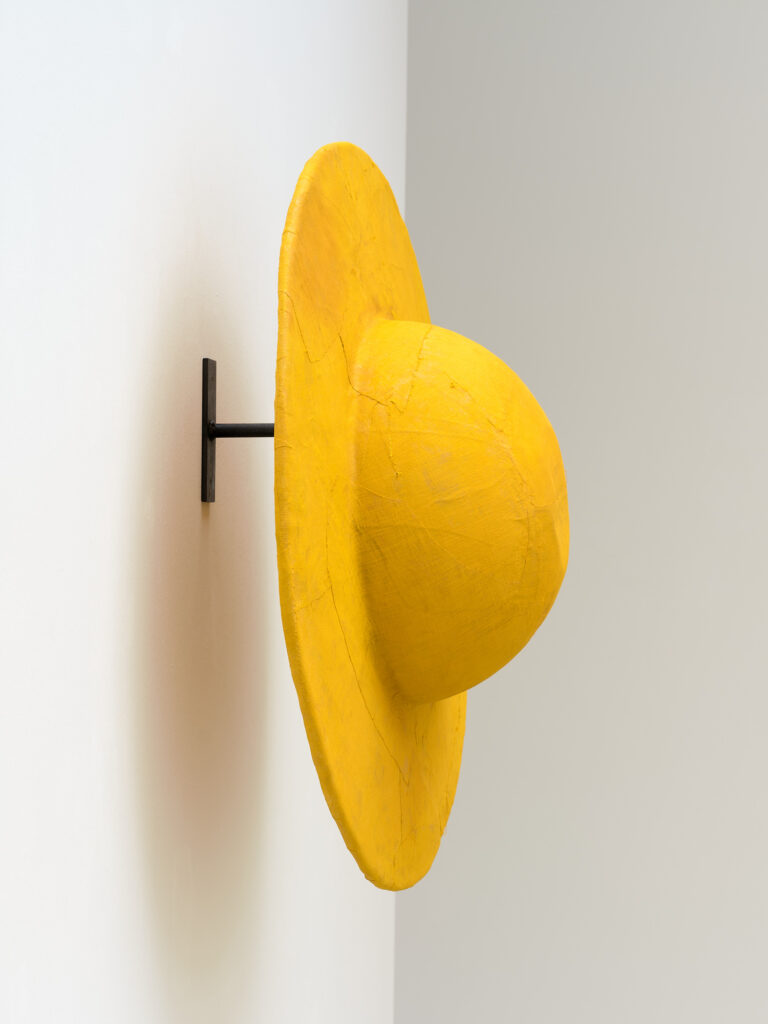
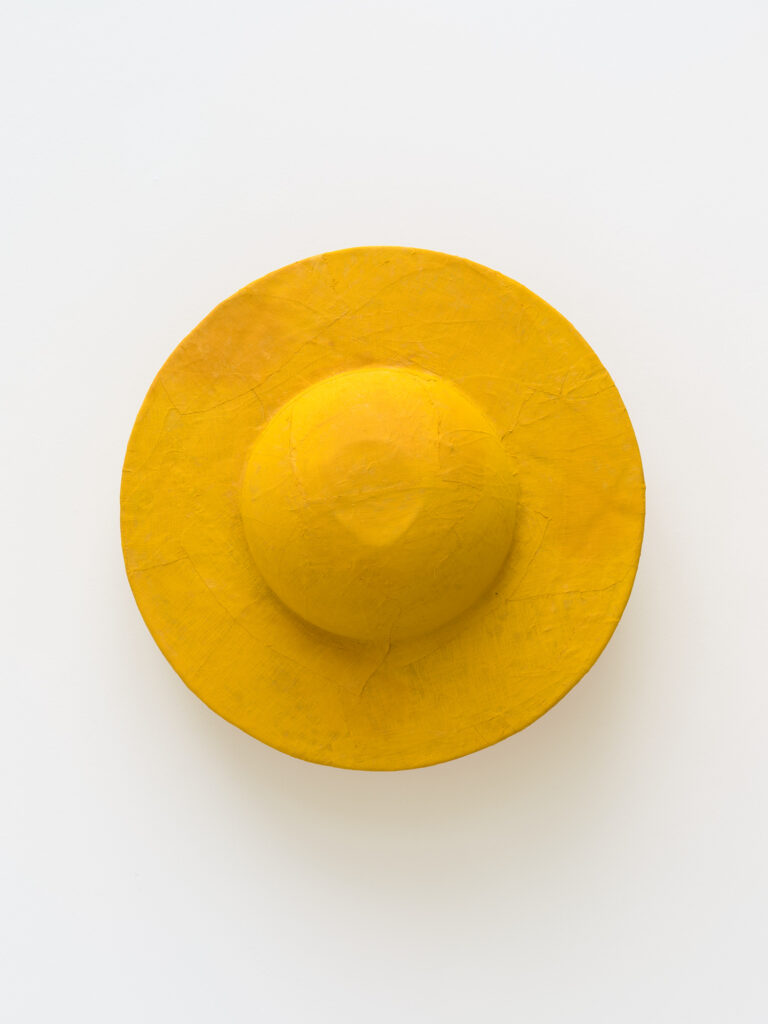
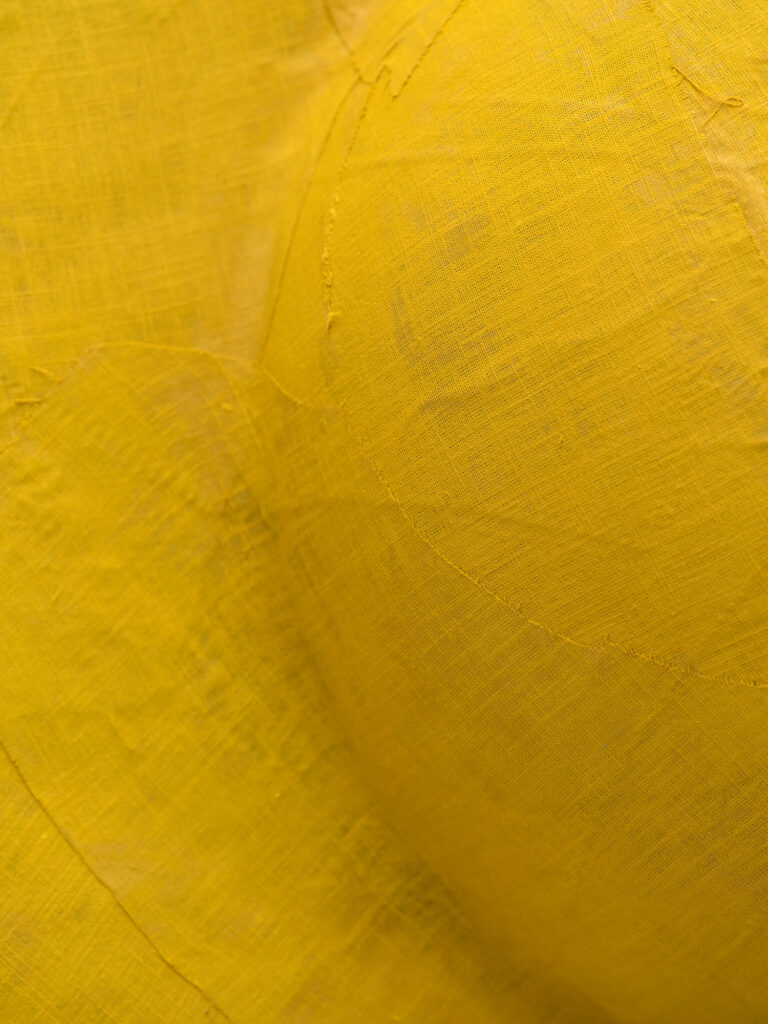
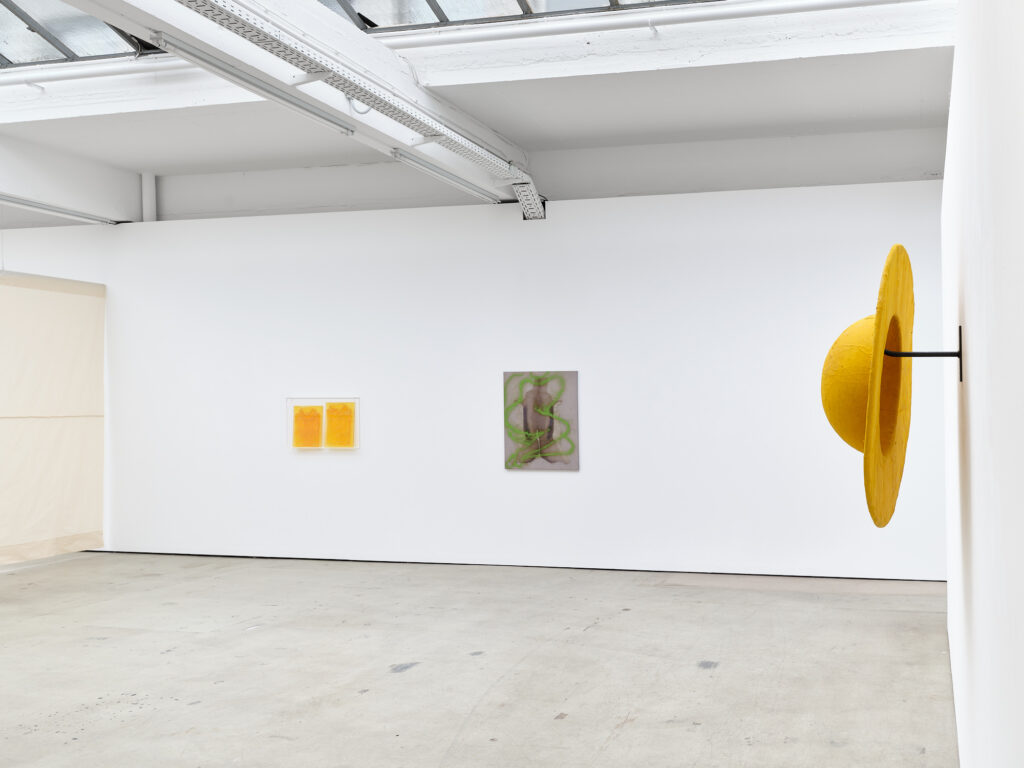
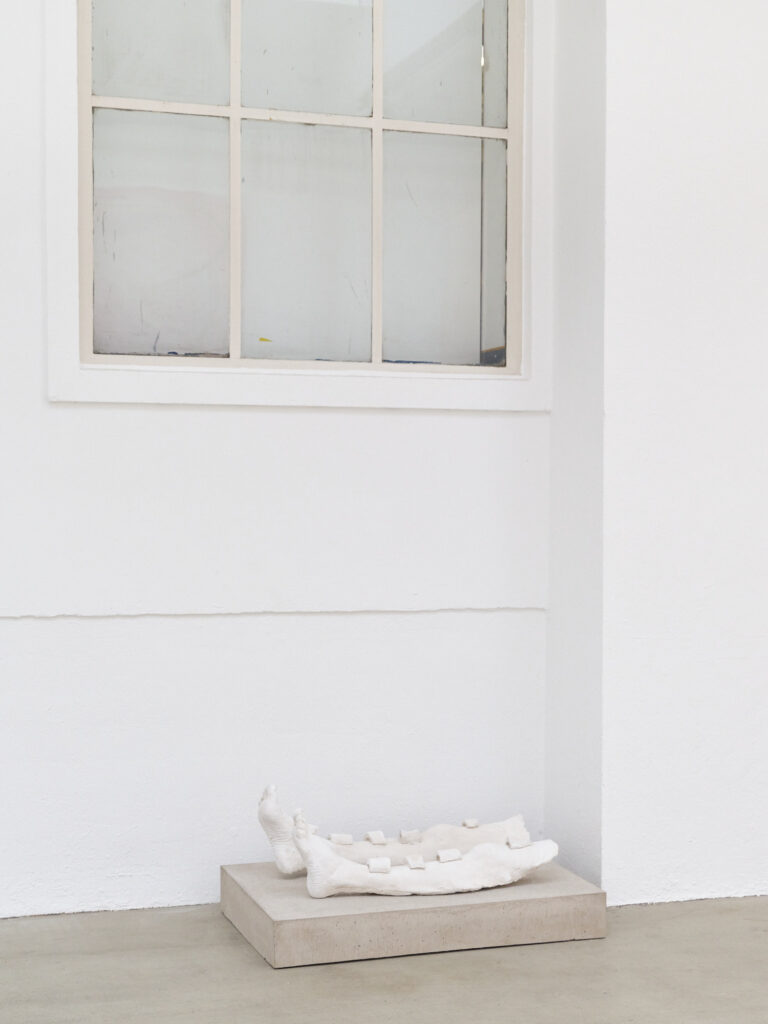
At first, the concrete and plaster of Sarion’s sculptures convey a masculine gravitas of strength, durability, and permanence. Yet the works are androgynous: Two folded, sweat-stained shirts ferment to a dried-piss orange between sheets of acrylic, like scientific specimens. Layers of delicate orange linen shape an oversized sunhat on a wall. The skin’s vulnerability appears with these oranges of a fake tan, of sweat, shirts and hats— protective bodily coverings.
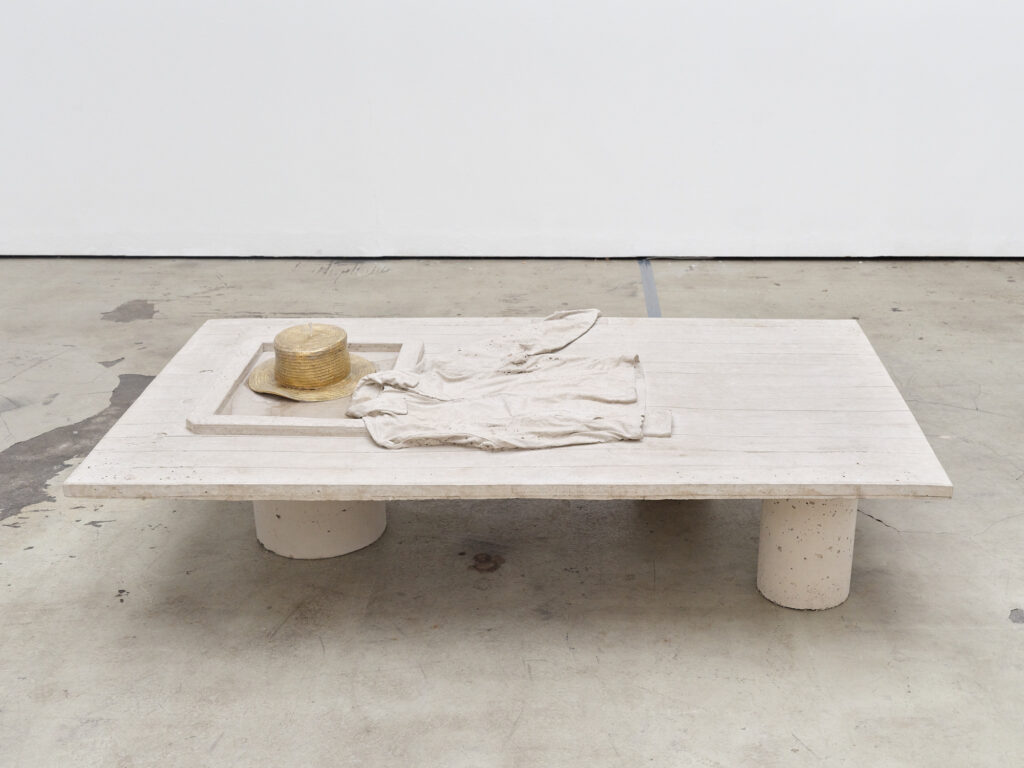
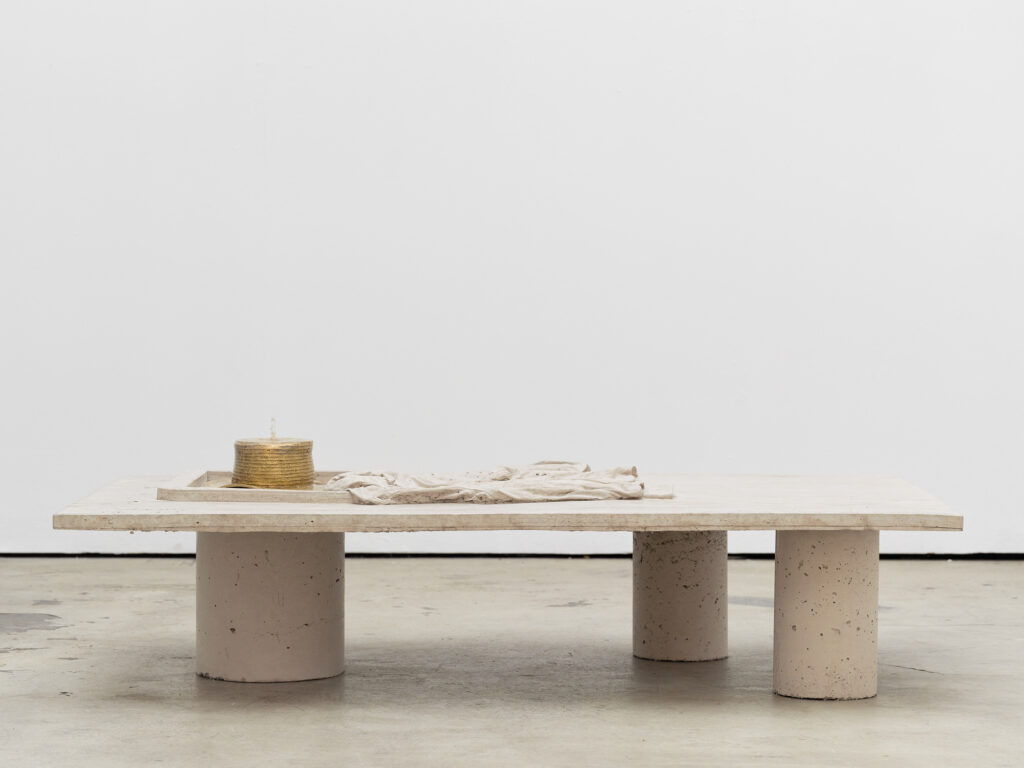
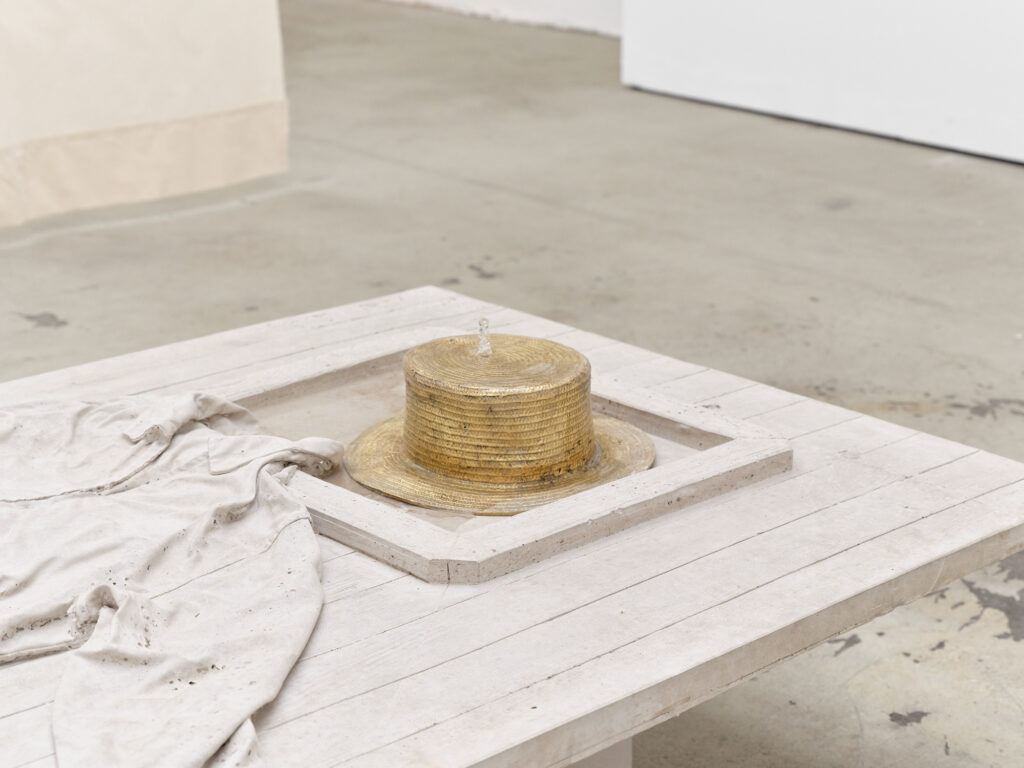
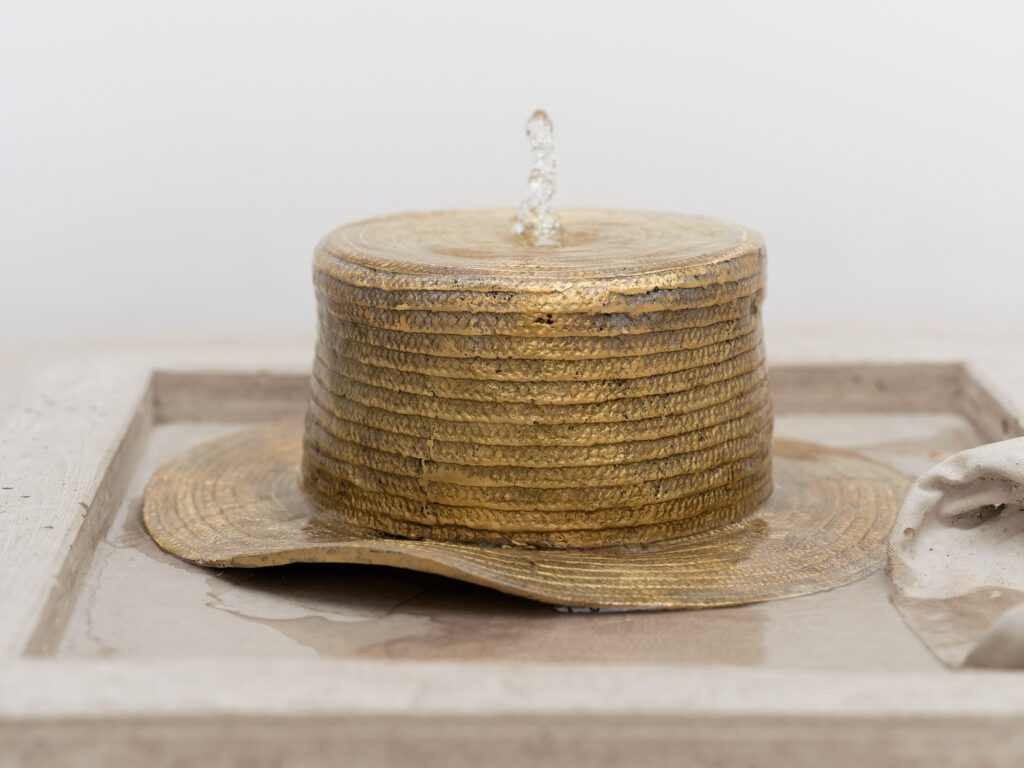
Below, The Fugitive presents us with another hat, this one cast in resin, pumping out a fountain atop a brutalist, heavy door. This once-imposing symbol of a barrier, now levelled, becomes a simple surface. Almost effeminate, romantic, water trickles over it. Or is this the piss, or sweat, of the escaped? Gravity does its work; it disciplines the disciplinary.
In Genet’s 1950 silent film, Un chant d’amour (“A Song of Love”), a prisoner fantasises about his neighbor beyond his cell wall, in an eroticisation of the enclosure. What he receives are traces: a hole in the wall allows for cigarette smoke to pass between their open mouths, smoke becoming a surrogate for other intimate secretions of a body. Don’t we often focus our desire on a trace—whatever has escaped the beloved’s body— sniffing their shirts for something to hold, something to summon back their ghost?
Ghosts, as much as humour, bubble up and out of Sarion’s quiet sculptures— but not necessarily of the dead. Each work suggests a character, an identity, a role once inhabited. And each character, like a snake, has shed his skin. What was bound is now free. Genet-like, there is also a tenderness to Sarion’s treatment of abject excretions; a re-appraisal of the unvalued productions of a body— what passes through is changed. From Der Stammgast (“The Regular”) to Skin of Them, an uncanny archive— of the domestic, the familial, the romantic, and the local— materialises. We can derive so much from fragments and artefacts. They speak with their own material telepathy.
“The most beautiful people are usually a little ugly,” Sarion says. It’s not symmetry that fixates us, but the imperfect— and these objects fixate in their elevated imperfections. It’s also a cry against beauty and toward romance, the same principle by which the abject might become a source of erotic obsession.
Where Sarion’s work observes the call of gravity and age, Sequoia Scavullo’s painted silk, layered animal hides, hot tub gossip sessions on video, and surreal, smoky paintings veer upward with an almost aerial claustrophobia of it. The colors, materials and motifs that appear— soft blush like the flesh of a newborn
baby; various shades of bloody reds; blues like the skin awash in the glow of a late night; horses, swans, stars, green glitter— remind, in visual tones, of what poets once coined the “gurlesque.” A hyper-femininity lay at the heart of this movement of the early ‘00s— almost cosmic in its excessive performance of girlhood and kitsch. But Scavullo doesn‘t satirise the girly burlesque of it all. Her work wears it, layers it, arms itself with it. Communicates with and through it.
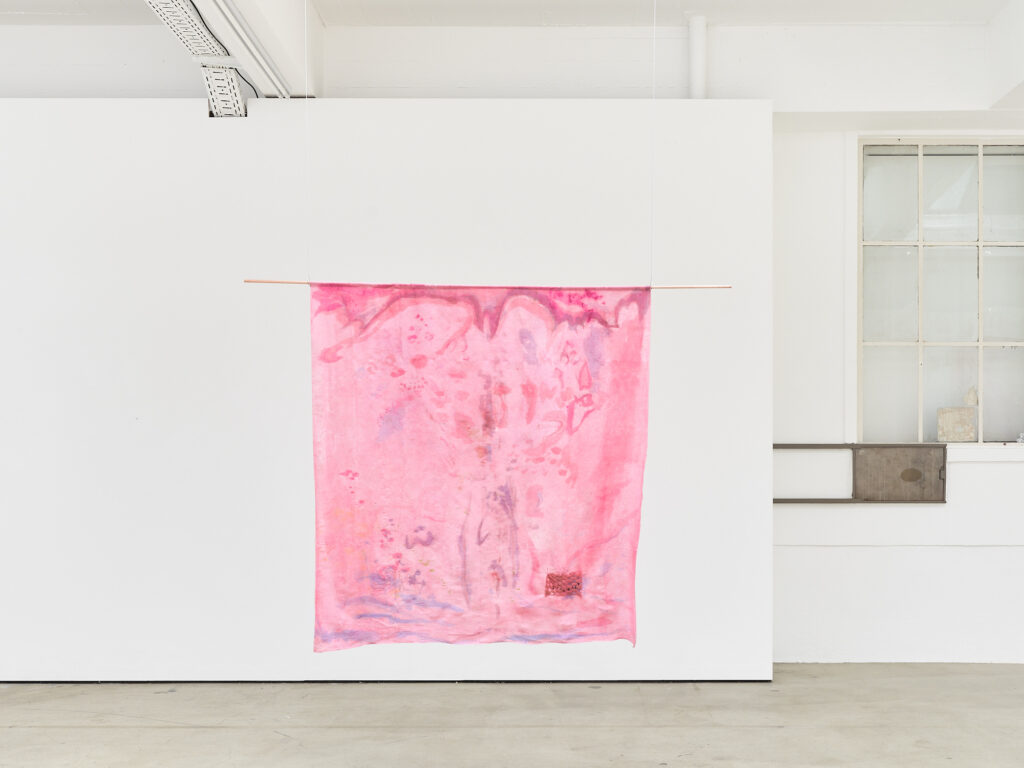
Like a map of the sky, stars appear on a painted and dyed canvas made from a bedsheet. From a distance, it almost looks like a placenta. Some version of Courbet’s L’Origine du Monde. Perhaps it’s called The Birth of the Universe. Or The Excess of it. As if humanity were born of the escaped bodily fluids of the Big Bang; a placental excretion of the universe’s ever-expanding pregnancy. The actual title, Democrazia, Natura, Amore, is a reference to Cicciolina’s political campaign from the early 2010s. Meanwhile, a suspended silk painting chimes in: this one a recreation of a photograph of human skin under the microscope. Again, it is both cosmic and placental. Eternal— the logo of a cosmetics brand, branded twice. Don’t you hear the rhyme between cosmic and cosmetics?
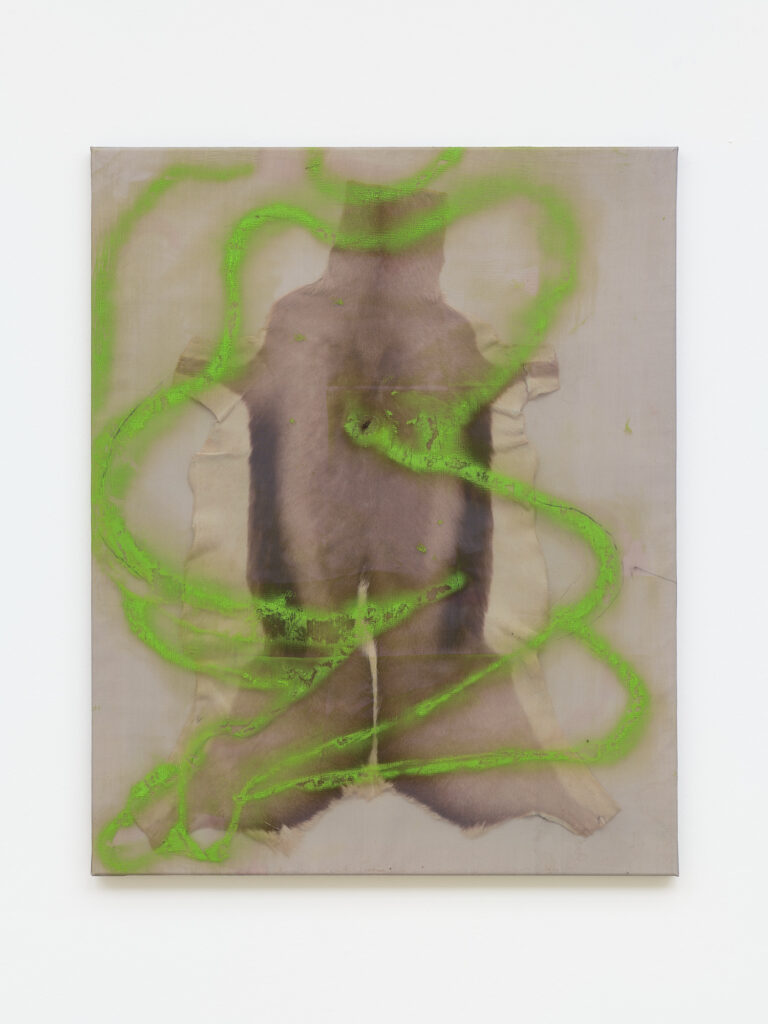
Make-up hides, changes, and amplifies a surface. It is a soft armor of the commodified feminine, a wresting back of the dominating gaze. It is also a layer, under which another layer of erotic vulnerability emerges. In Two Shells, beneath the painted outline of a woman’s body is an animal hide. There is power in what we choose to reveal, inasmuch as what we reveal exposes us. But Scavullo adds another tune to the harmony here: Is identity fixed? Why do we privilege what’s inside as the truth? Where is the real, if identity is an infinite system of surfaces, or shells?
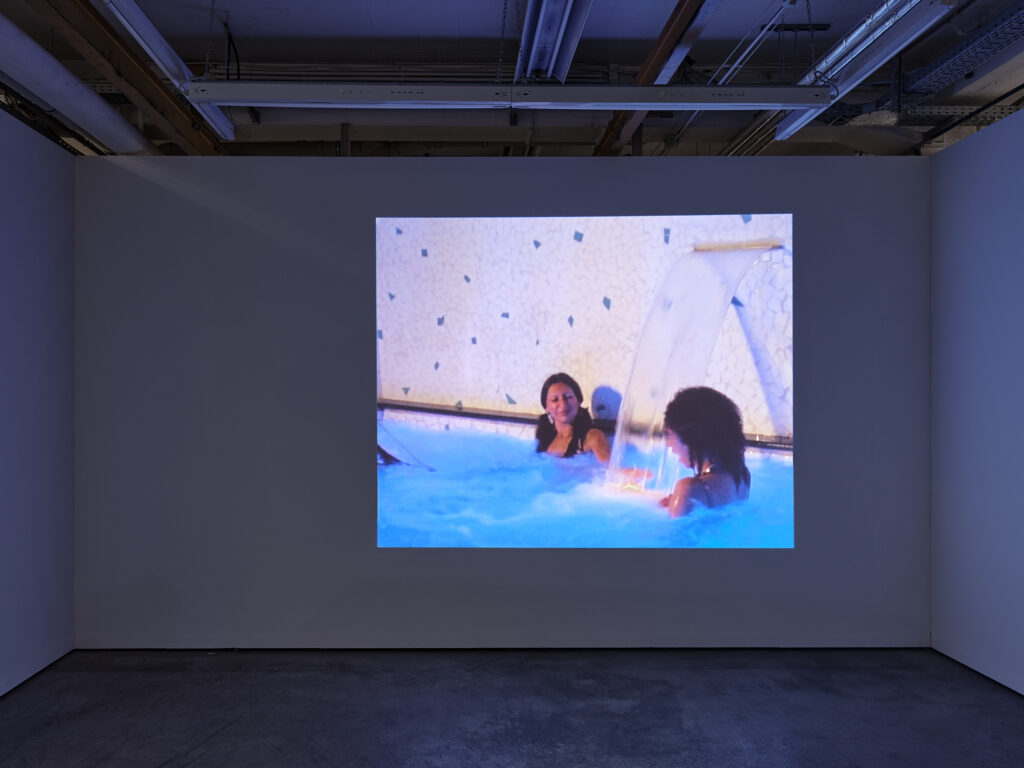
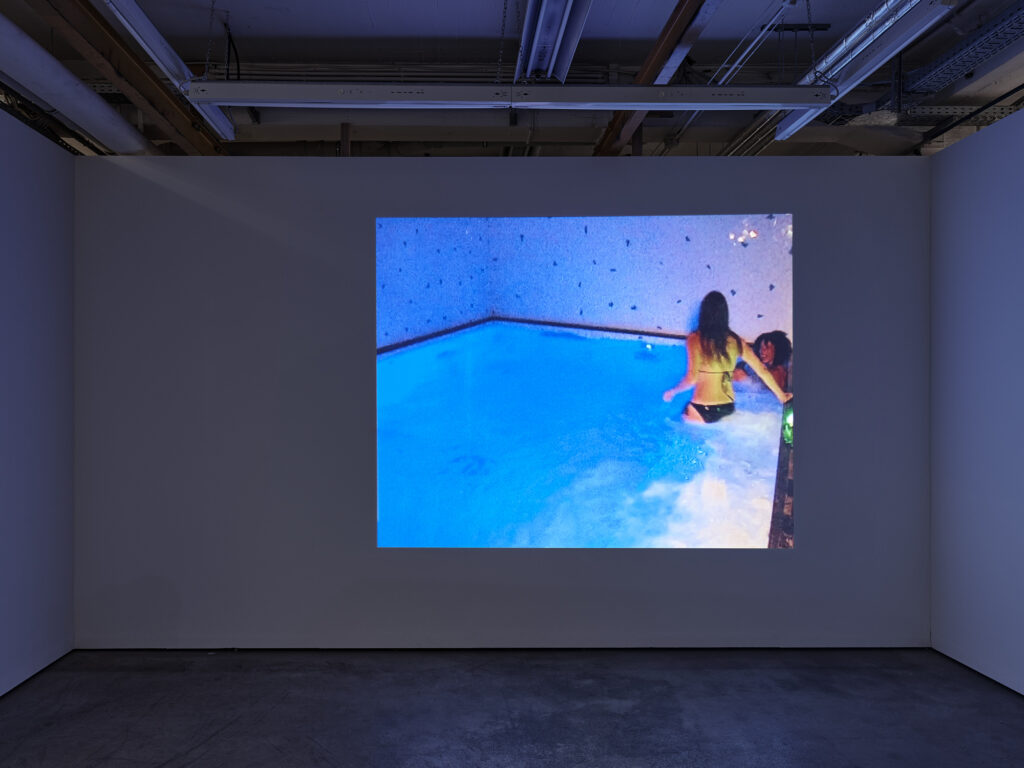
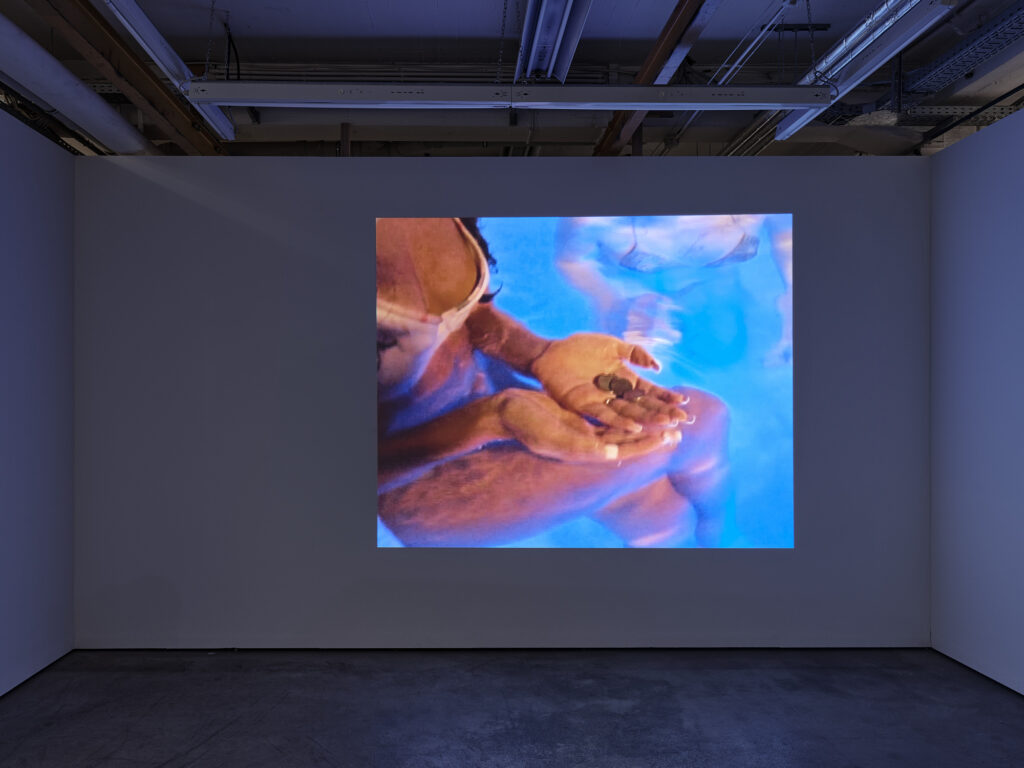
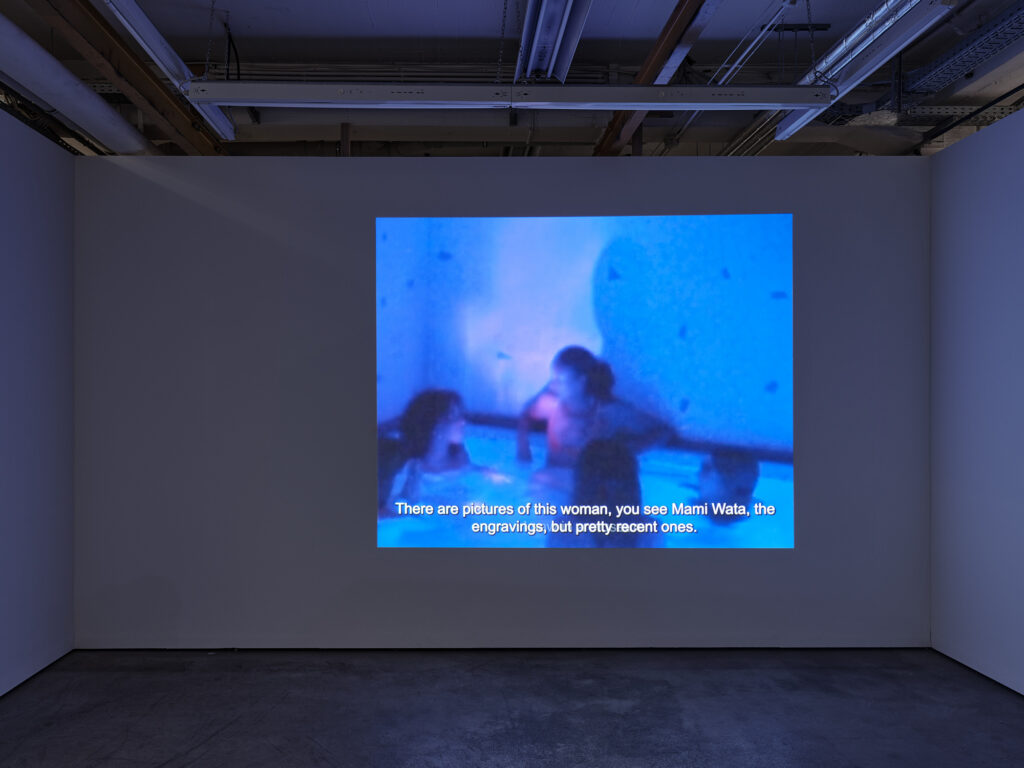
Of lovers and layers — sometimes it’s hard to know where one begins and the other ends. A horse is tattooed with the body of its lover. Scavullo’s video, Dolly Dolly Baby, is titled after the famously cloned sheep. At last, we hear voices— but these too are layered with the sounds of water, voices made material by the room’s echo. Intimacy takes the form of gossip, beginning with a myth about pregnancy without penetration. Like Genet’s smoke, this information is passed from mouth to mouth, in a closed circuit of gender. Though we watch, their circle is impenetrable. And yet— as the video’s story goes— can a gaze, too, impregnate?
In Arctinus of Miletus’ telling of the Trojan war, Penthesilea is an Amazon queen who falls in love with Achilles. They meet, they battle, and Achilles slays her. But at the moment of her death, Achilles falls furiously in love with the corpse of the female warrior. Nearly 3000 years later in Germany, Heinrich von Kleist inverts the dynamic in his dramatic adaptation of the myth.¹ Penthesilea, in a sudden Dionysian frenzy, now kills her beloved Achilles — tearing his flesh apart with her own teeth. Shortly before she dies of grief, she famously proclaims:
“Küsse,
Bisse, das reimt sich…”
(Kisses, bites, they rhyme…)
Would she say it in a whisper? Under the breath? These fated lovers also appear in the background of Scavullo’s Sister Stud Smoke DNA. What else, here in the exhibition— in all these dichotomies of gender and beauty— rhymes? We don’t live in this world alone; we meet ourselves through the eyes of others. We fall in love, become a blur of ourselves. We pass through others. They pass through us.
Zack Darsee, 2026
